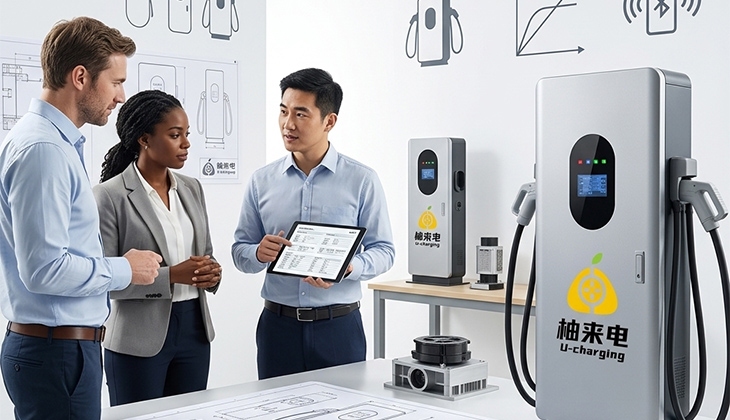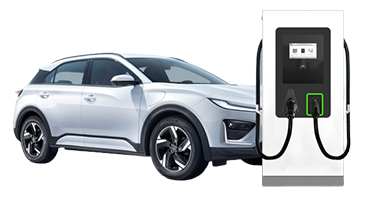
The global electrification of transportation is accelerating the demand for commercial EV charging infrastructure. For businesses investing in EV charging solutions, understanding AC vs DC EV charging is essential for selecting the right technology, cost structure, and deployment strategy. At U-charging, we understand that building a charging network is about more than just hardware; it is about aligning technology with your specific business model. Our team of specialists in power electronics and new energy technology is dedicated to helping B2B partners navigate this complexity. We provide equipment designed to help businesses build reliable, efficient, and scalable EV charging networks for long-term growth. This guide will help you establish a “strategic selection logic” to determine the optimal AC vs DC EV charging mix for your commercial goals.
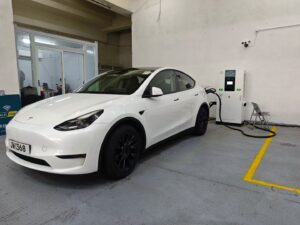
AC vs DC EV Charging: Understanding the Key Technical Differences
AC Wallbox Charger and Onboard Conversion Logic
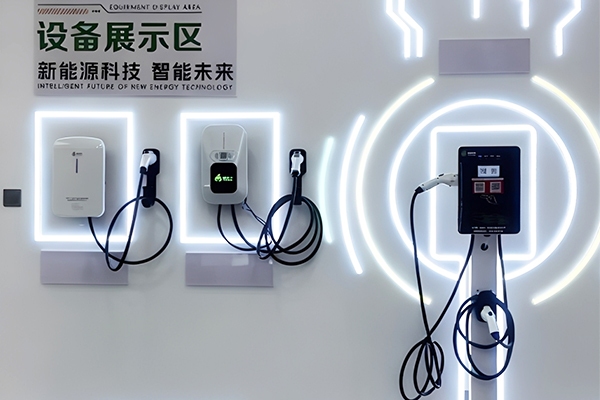
The primary difference between AC and DC charging lies in where the power is converted from alternating current (AC) to direct current (DC). In an AC EV charger setup, the station provides AC power from the grid to the vehicle, and the vehicle’s onboard charger (OBC) converts AC electricity into DC power for battery storage. Because this conversion happens inside the vehicle, the charging speed is often limited by the vehicle’s internal hardware. U-charging offers various AC solutions, such as our 7kw/11kw/22kw Smart AC EV Charger, which are ideal for scenarios where vehicles stay parked for several hours.
DC Fast Charging System and Direct Energy Flow
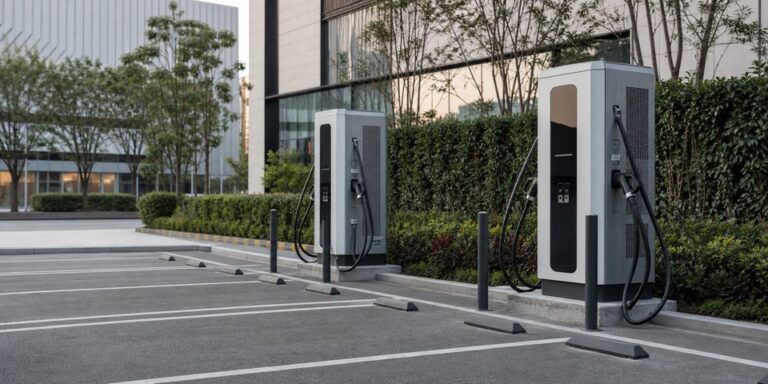
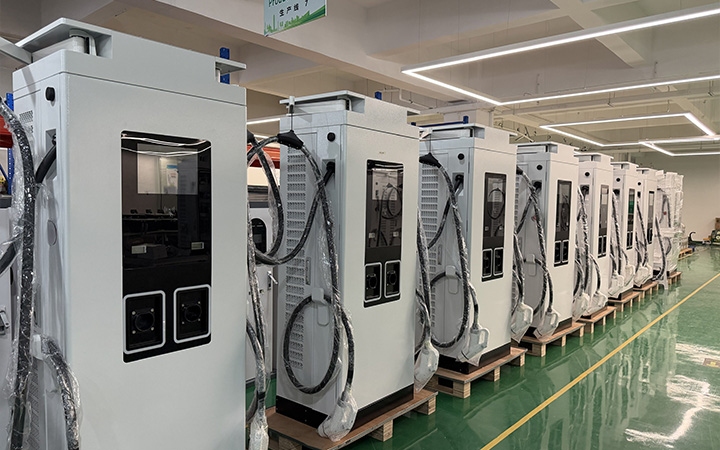
DC fast chargers integrate power conversion modules that convert grid AC electricity into controlled DC power that is delivered directly to the EV battery through the charging interface. This allows for significantly higher power outputs and much shorter charging times. U-charging provides high-power solutions, including our 120kW to180kW DC Fast Charger, which can enable rapid charging for compatible EV models, depending on battery capacity, charging standards, and vehicle charging capability.
AC vs DC EV Charging Quick Comparison
| Selection Factor | AC EV Charging | DC Fast Charging |
| Power conversion | The vehicle’s onboard charger converts AC power into DC power | The charging station converts AC grid power into DC before supplying the battery |
| Charging speed | Generally slower and limited by the vehicle’s onboard charger | Generally faster, but still limited by the vehicle’s battery and maximum DC charging capability |
| Typical dwell time | Several hours or overnight | Short stops and high-turnover charging |
| Infrastructure needs | Usually lower site power and installation requirements | Higher grid capacity and more complex electrical planning |
| Suitable locations | Homes, apartments, hotels, offices and long-stay parking | Highways, gas stations, public charging hubs and fleet depots |
| U-charging examples | 7kW/11kW/22 kW Smart AC EV Charger; 22kW/42 kW Dual-Gun AC Charger | 120–180 kW DC Fast Charger; 240–480 kW DC Fast Charger |
| Commercial role | Amenity charging, employee charging and destination charging | Higher vehicle throughput and time-sensitive fleet charging |
| Investment profile | Lower initial equipment and site-development costs | Higher initial investment and potentially higher charging throughput |
Evaluating Business Needs for Strategic Selection
Analyzing Customer Dwell Time and Parking Behavior
The most important factor is how long a vehicle typically stays at your location. If you operate a hotel or an apartment complex, your guests stay overnight, making a U-charging AC wallbox the suitable solution. Conversely, if you run a highway service station or a gas station, users expect a “quick-stop” experience, making a high-power DC charger essential.
Vehicle Turnover Rates and Range Requirements
Businesses with high vehicle turnover, such as busy retail locations, taxi fleets and public charging sites, are generally better served by DC fast charging because it can support shorter charging sessions and higher vehicle throughput than conventional AC charging. For example, a U-charging DC charger installed at a retail location supports high-traffic turnover, ensuring that charging spots are available for the next customer quickly.
Available Power Capacity and Grid Infrastructure Constraints
Before deployment, we help our clients evaluate their local grid capacity. DC fast chargers require significant power and often involve more complex installation and power distribution planning. If your site has limited power, we might recommend our DC 60kW + AC 22kW Integrated Charger, which provides a balanced fast and slow charging option in a limited space.
Optimal Scenarios for AC EV Charger Deployment
Destination Charging for Hotels and Leisure Resorts
For the hospitality sector, EV charging is a value-added service. U-charging AC chargers are suitable for “destination charging,” where guests stay for 4-8 hours or overnight. Our 22kW/42 kW Dual-Gun AC Charger is a popular choice for hotels, allowing two vehicles to charge simultaneously from a single unit, maximizing space and utility.
Long-Stay Workplace Charging for Employees and Tenants
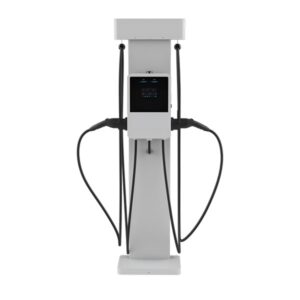
Commercial office buildings can combine AC charging for employees who remain parked throughout the workday. Our 14 kW/42 kW Floor-standing AC Charger provides a professional and durable solution for corporate parking areas, helping businesses meet their sustainability goals affordably.
Cost-Effective Residential and Multi-Unit Parking Solutions
For residential indoor deployments, such as apartment garages, a 7kW AC charging solution is often sufficient for daily use. These units are easy to install and provide reliable energy for residents while they sleep.
High-Demand Cases for DC Fast Charging Solutions
Gas Station Transformation into Modern Energy Hubs
Gas stations can evolve into multi-energy service locations by integrating EV fast charging infrastructure. By installing U-charging 60kW or 120kW units, these sites can serve the immediate demand of drivers on long trips.
Public Charging Stations for High-Traffic Commercial Retail
Public charging stations require robust hardware and efficient operation management. We provide DC fast charging solutions for commercial retail locations, shopping centers, and public charging operators.
Mission-Critical Support for Electric Fleet Operations
Taxi fleets, logistics providers, and ride-hailing services cannot afford long downtimes. They require predictable schedules and reliable DC fast charging system support. U-charging provides fleets with remote monitoring and power planning to maximize fleet availability and operational efficiency.
AC vs DC EV Charging Cost: Hardware, Installation, and Operational Considerations
Initial Capital Expenditure and Hardware Pricing Analysis
The AC vs DC EV charging cost varies greatly at the outset. AC EV charger units are significantly less expensive because they rely on simpler internal electronics. A DC fast charger, meanwhile, requires heavy-duty components and more sophisticated cooling systems, leading to a higher initial purchase price.
Long-Term Operational Expenses and Maintenance Requirements
While AC chargers are simpler to maintain, DC chargers often generate more revenue per hour of use. At U-charging, we offer a 1–2 years warranty and full technical support to ensure your advanced DC charging system remains operational and profitable.
Revenue Generation Potential and Return on Investment
Businesses can create new revenue streams through charging service fees. While AC chargers are great for “customer retention” and increasing property value, DC fast chargers can support more charging throughput in locations with sufficient demand, which may create greater charging-service revenue potential than low-power AC charging. However, actual return on investment depends on charger utilization, electricity tariffs, demand charges, pricing strategy, installation costs, maintenance expenses and vehicle compatibility.
How U-charging Empowers Your Infrastructure Journey
Project Deployment and Remote Technical Support for Global Partners
U-charging supports commercial partners through requirements collection, feasibility assessment, charger configuration, OEM/ODM design, delivery coordination and installation guidance. After deployment, the company can provide remote technical assistance, operating documentation, software updates and troubleshooting support. The scope of on-site construction, commissioning, local installation and long-term maintenance should be confirmed separately in the quotation or project agreement.

Professional OEM/ODM Support for Scalable Brand Growth
For distributors and large-scale operators, we provide full OEM/ODM product customization. We can collect your specific requirements for logos, appearance, and communication protocols to deliver a branded charging solution that differentiates you in the market.
Conclusion
Building a successful commercial EV charging solution requires foresight and a strategy that balances user needs with business realities. The choice between AC and DC charging is not a matter of which technology is “better,” but which one fits the operational requirements of your site. By choosing U-charging, you are partnering with an expert team that has extensive experience in international EV charging projects. Whether you need the cost-effective reliability of an AC wallbox charger for your hotel or the high-speed performance of a DC fast charging system for your logistics fleet, we provide the reliable and scalable technology to power your success. Let us help you transform parking facilities into valuable EV charging service locations.
Ready to build the right EV charging infrastructure for your business? Contact U-charging’s EV charging specialists for a customized consultation, site assessment, and scalable AC/DC charging solution tailored to your project requirements.
FAQ
Q: Is AC or DC EV Charging Better for Commercial Businesses?
A: It depends on your customers’ dwell time. If vehicles stay for several hours (like at a hotel or office), U-charging AC EV charger units are more cost-effective. If you need high turnover (like at a gas station or highway), a DC fast charging system is essential.
Q: What is the installation cost difference between AC and DC EV chargers?
A: DC chargers require higher power capacity from the grid and more complex electrical infrastructure. However, they also offer higher revenue potential because you can charge more for the convenience of speed.
Q: Can I customize the chargers with my company’s logo?
A: Absolutely. As a professional EV charging solution provider, U-charging offers full OEM/ODM services. We can customize the appearance, UI, and packaging to match your brand identity.