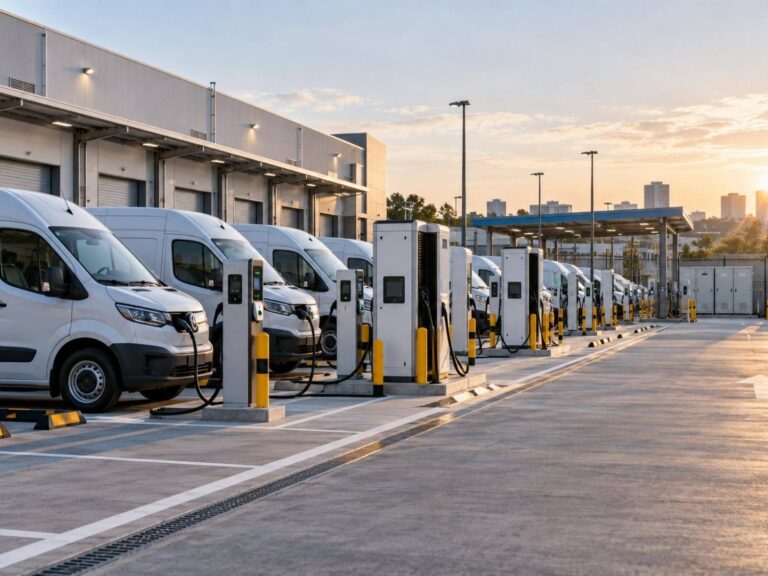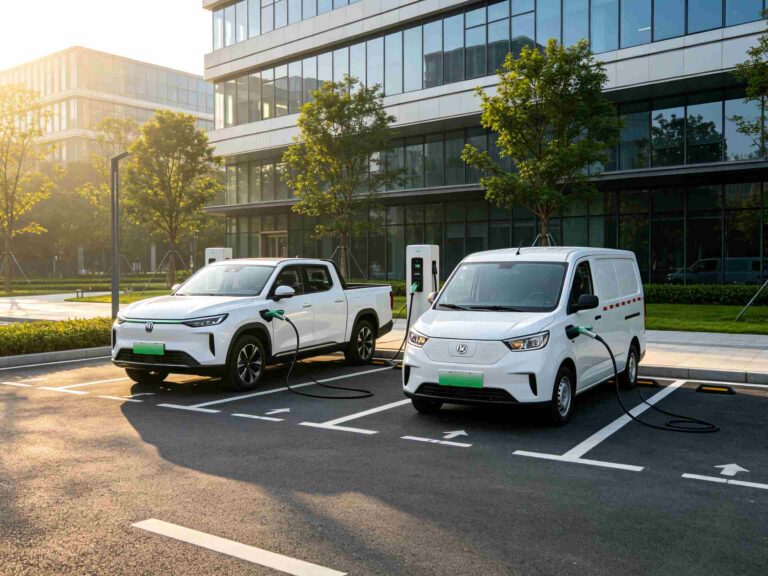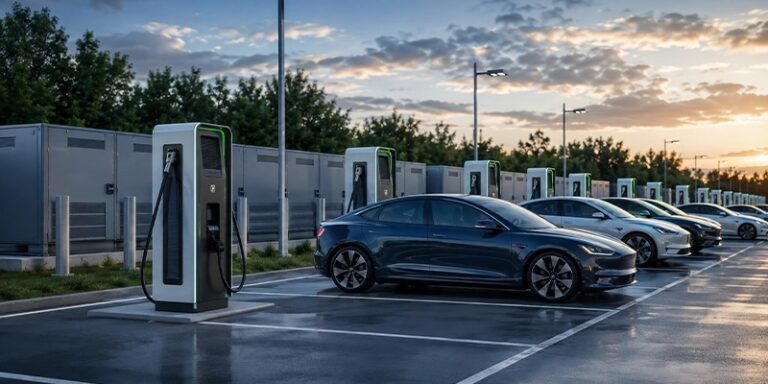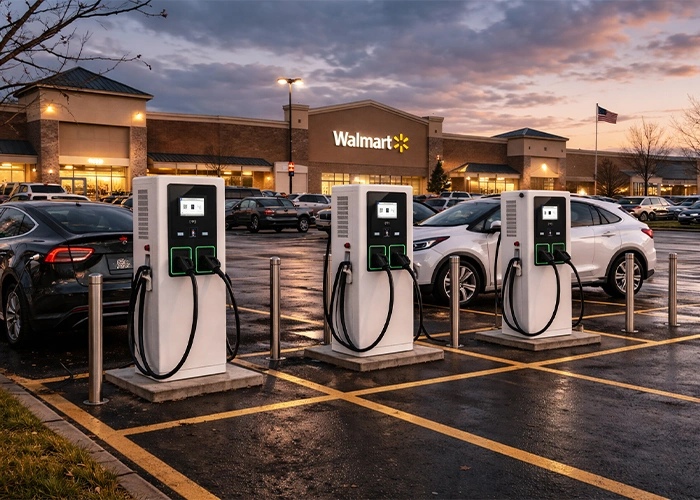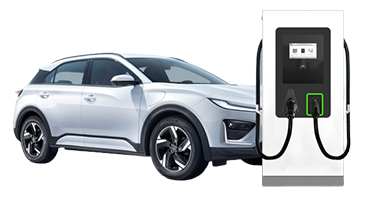
Retail EV charging solutions and commercial EV charging stations should be designed around shopper dwell time, parking turnover, site energy capacity, and daily parking operations. For shopping centers, retail parks, property owners, parking operators, charging point operators (CPOs), and EPC or installation partners, the right configuration depends on how the site is used rather than charger power alone.
AC charging suits customers and employees who stay for longer periods, while DC fast charging can serve high-turnover parking areas near shopping-center entrances. A balanced layout combines charging speed, parking circulation, electrical capacity, and clear access rules.
- charging offers a 7kW / 11kW / 22kWsmart AC charger for destination parking and a 120–240kW low-noise DC fast charger for shorter customer dwell times and higher charger utilization. Retail operators can use these product categories to assign different charging roles to customer bays, staff parking, retail-park entrances, and shared commercial spaces.
Who Is This Retail EV Charging Solution For?
Retail EV charging projects involve different commercial objectives depending on who owns, operates, installs, or manages the charging infrastructure. U-charging solutions can support:
- Shopping Centers and Malls: Combine destination AC charging with selected DC fast-charging bays for different shopper dwell times.
- Retail Parks: Plan charging across supermarkets, restaurants, cinemas, fitness centers, and other shared parking areas.
- Property Owners and Asset Managers: Add EV charging infrastructure to commercial properties while considering parking use, electrical capacity, and future expansion.
- Parking Operators: Integrate charging bays into existing parking operations with clear access, turnover, and user-management policies.
- Charging Point Operators (CPOs): Deploy network-connected AC and DC charging equipment for commercial charging operations.
- EPC Contractors and EV Charger Installers: Source charging hardware and coordinate charger configuration, communication requirements, installation documentation, and project delivery.
- Retail Chains and Multi-Site Operators: Standardize charger configurations across multiple stores or commercial properties while adapting deployment to individual site conditions.
U-charging works with commercial customers and project partners to match charger type, power level, communication requirements, installation conditions, and expansion planning to each retail charging project.
Why Retail EV Charging Solutions Need Careful Planning
Parking at shopping centers and retail parks is shaped by trading hours, peak shopping periods, restaurants, cinemas, employee shifts, and shared commercial traffic. A charger that works well in a quiet car park may be poorly placed at a busy entrance where vehicles need to circulate quickly.
Planning starts by mapping when vehicles arrive, where they park, and how long they normally remain. It should also identify pedestrian routes, delivery lanes, accessible spaces, trolley areas, and any part of the site that must remain clear during the busiest periods.
Match Chargers to Customer Dwell Time
Customers who shop, dine, or attend an appointment may remain on site for a substantial period, making AC charging a practical fit for many bays. A limited number of higher-power charging bays can support shorter customer visits.
The purpose is to make charging available without creating a parking bottleneck. Managers should measure real parking behavior before deciding how many spaces need AC or faster charging.
Choose AC EV Chargers for Destination Parking
The U-charging 7kW / 11kW / 22kW Smart AC EV Charger is available in 7kW, 11kW, and 22kW configurations. It supports wall-mounted and pedestal installation, includes a 5-meter charging cable and touchscreen, and carries an IP55 enclosure rating.
APP control, RFID access, and scheduled charging give retail operators several ways to manage customer and staff use. The charger also supports 4G, Wi-Fi, Ethernet, Bluetooth, and OCPP 1.6J, creating multiple communication paths when a compatible management platform is selected.
AC power should still be matched to the vehicles using the site. A 22kW rating does not mean every vehicle will draw 22kW because the onboard charger and local electrical conditions influence actual charging behavior.
Use AC in Long-Stay Areas
AC chargers can be placed near restaurants, cinemas, fitness facilities, supermarkets, offices, or employee parking where vehicles remain stationary for longer. Wall-mounted units can save floor space near suitable structures, while pedestals can serve open parking areas.
The 5-meter charging cable should be considered during bay layout design to ensure connector reach while maintaining pedestrian safety. Cable storage, bay width, lighting, drainage, and protection from vehicle impact should be considered together.
Use DC Fast Chargers for Higher-Turnover Retail Sites
The U-charging 120–240kW Low-noise DC Fast Charger covers a 120–240kW range, uses a dual-gun structure, and provides a 200–1000V output range. It includes a 10.1-inch touchscreen and supports APP and RFID starting methods, with POS available as an option.
The DC unit supports 4G, Wi-Fi, Ethernet, Bluetooth, and OCPP 1.6J. Its air-cooling system is optimized for lower noise output, which can be relevant near customer entrances, offices, residential boundaries, or other noise-sensitive areas. No specific decibel value should be assigned.
A DC charging area can support drivers making shorter visits to shopping centers, retail parks, and other commercial destinations. Because the available product information does not define simultaneous dual-gun power allocation, operators should not promise a particular power split when both connections are used.
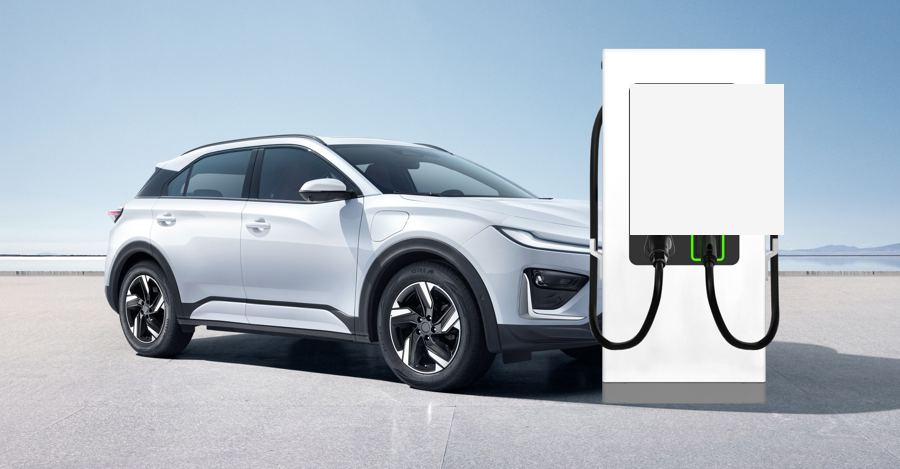
Design Charging Around Parking Operations
Retail charging must coexist with existing parking management operations and keep pedestrian, delivery, accessible, and emergency routes clear.
A clear bay layout also helps drivers understand where they may wait, charge, or leave after a session. Operational signs and staff guidance should be simple and consistent, without implying that every charger has identical access, payment, or roaming capabilities.
Retail EV charger installation requires evaluation of electrical capacity, cable routing, civil works, parking layout, and local compliance requirements. A detailed site assessment helps determine charger quantity, power allocation, and future expansion plans.
Build a Scalable Retail Charging Layout
A phased deployment can begin with the areas showing the clearest charging demand while reserving electrical capacity, conduit routes, network coverage, and space for future expansion.
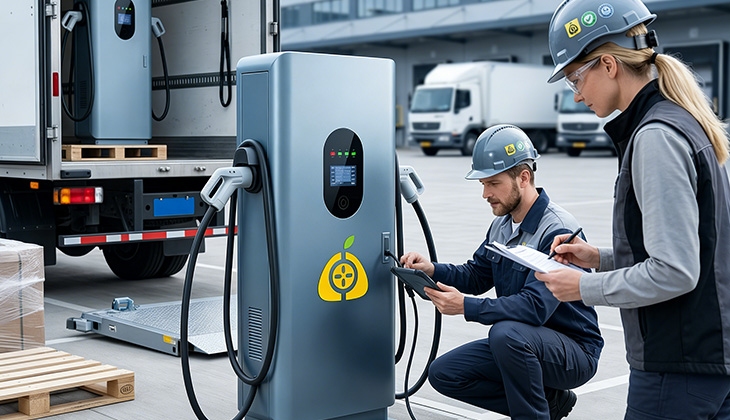
From Site Assessment to Charging Operation
A retail EV charging project involves more than selecting AC or DC hardware. U-charging supports commercial customers, CPOs, property owners, EPC contractors, and installation partners through the main stages of charger configuration and project deployment.
1. Site Requirements Assessment
The process starts by collecting information about project location, parking capacity, shopper dwell time, expected charging demand, available electrical capacity, vehicle types, connector standards, and operating requirements.
2. Charger Configuration
Based on site requirements, U-charging can help evaluate suitable AC or DC charger types, power levels, charger quantities, communication options, access methods, and expansion considerations.
3. Technical and OEM/ODM Confirmation
For customized projects, U-charging confirms the required technical configuration and OEM/ODM scope before production, including any agreed product, branding, interface, communication, or packaging requirements.
4. Production and Quality Control
After the configuration is confirmed, charging equipment is produced according to the approved requirements and checked before shipment.
5. Packaging and Logistics Coordination
U-charging supports equipment packaging, delivery, and logistics coordination according to the project schedule and destination requirements.
6. Installation and Commissioning Support
Local installation must follow applicable electrical regulations, site conditions, and project requirements. U-charging can provide documentation, remote technical assistance, and optional installation guidance to support EPC contractors and local installers.
7. Operation Training and After-Sales Support
After deployment, U-charging provides operational guidance, technical support, maintenance assistance, and software-related support according to the selected system and project scope.
Why Choose U-charging for Retail EV Charging Projects?
Factory-Direct EV Charging Supply
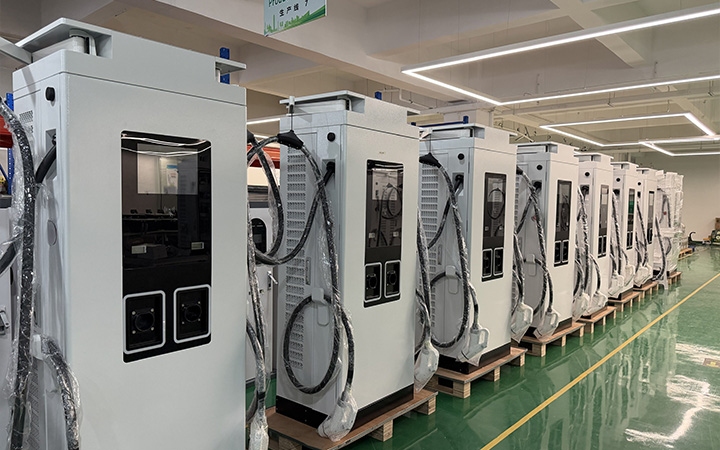
U-charging develops and produces AC and DC EV charging equipment for commercial and public charging applications. Factory-direct supply can support distributors, installers, CPOs, and commercial project partners that require project-based charger sourcing and longer-term cooperation.
AC and DC Charger Portfolio
The product portfolio covers portable chargers, AC charging stations, and DC fast chargers, allowing retail projects to configure different charging roles around shopper dwell time, employee parking, parking turnover, and electrical capacity.
OCPP and Connected Charging Options
Selected U-charging AC and DC chargers support OCPP connectivity and multiple networking methods for integration with compatible charging management platforms. Final protocol and platform compatibility should be confirmed for each project configuration.
Project Support Beyond Hardware Supply
U-charging combines charger manufacturing with project-level support for distributors, CPOs, property owners, EPC contractors, and installers.
OEM/ODM for Distributors and Project Partners
OEM/ODM capabilities include branding, appearance, interface, packaging, communication requirements, and project-specific product configuration. This can support distributors, CPOs, EPC contractors, and other partners developing charging solutions for their local markets.
Conclusion
Effective retail EV charging requires the right balance of parking behavior, electrical capacity, charger type, and future expansion.
U-charging supports shopping centers, retail parks, property owners, CPOs, and EPC partners with AC/DC charging equipment, OEM/ODM capabilities, and project support from configuration to deployment. Contact U-charging to request a retail EV charger configuration or talk to an EV charging engineer.
FAQ
Q: Are AC or DC chargers better for retail parking?
A: AC chargers suit shoppers and employees who remain parked for longer periods, while DC fast chargers support shorter visits and higher vehicle turnover. Many retail properties can combine both types by placing AC equipment in destination parking areas and reserving selected entrance or shared spaces for DC charging.
Q: How many EV chargers does a shopping center need?
A: There is no fixed number for every shopping center. Charger quantity should be determined by parking capacity, average dwell time, expected EV traffic, peak-period demand, electrical capacity, charger utilization targets, and future expansion plans. A retail property may begin with selected AC charging bays and DC fast-charging spaces, then expand based on actual usage data.
Q: Can U-charging help with retail EV charging project planning?
A: Yes. U-charging can support requirement collection, charger configuration, OEM/ODM customization, equipment production, logistics coordination, installation guidance, operational training, and after-sales technical support. Final installation and electrical design should comply with local regulations and site-specific requirements.