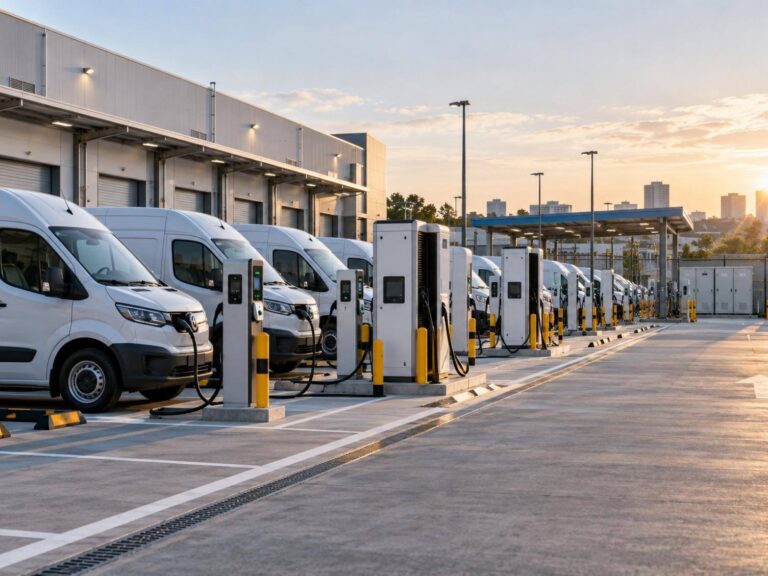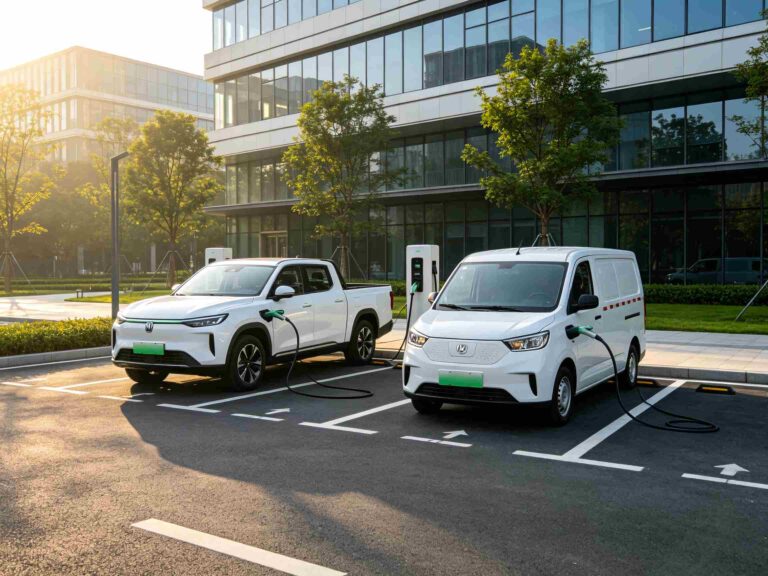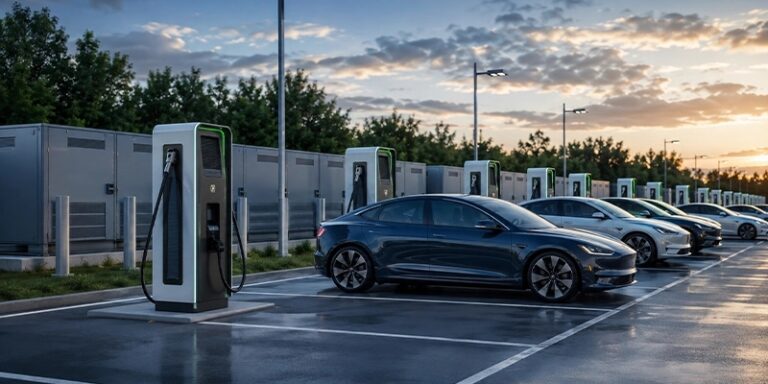
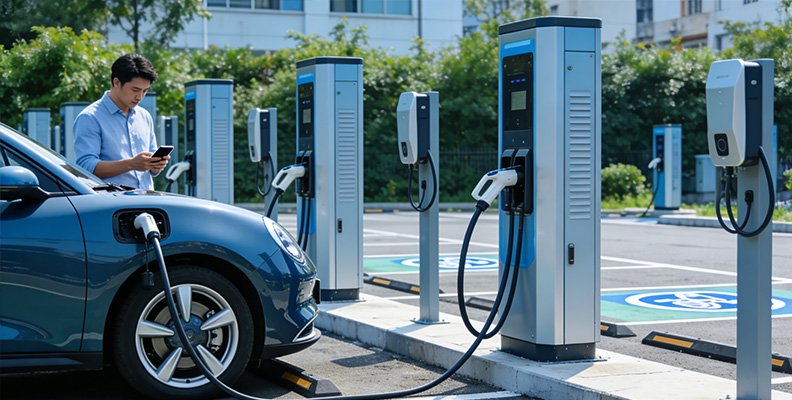
AC public charging stations serve as a sensible option for city and business settings. AC EV charging stations are particularly well suited to locations with extended vehicle dwell times, such as workplaces, shopping centers, hotels, residential properties, and municipal parking facilities. Carga en U AC charging solutions are available in different power configurations, including 7 kW, 11 kW, and 22 kW, allowing project developers to select charging capacity based on vehicle dwell time, electrical capacity, site requirements, and the onboard AC charging capability of supported EVs.
Why AC Public Charging Stations Fit Municipal and Commercial Sites
Match Charging With Longer Parking Times
AC charging is particularly suitable for locations with long vehicle dwell times. Municipal parking facilities, libraries, government offices, and hotels can provide practical AC charging capacity without requiring high-power DC fast charging infrastructure at every parking bay. Businesses should locate AC chargers in accessible, well-lit parking areas with convenient vehicle access, clear signage, appropriate cable reach, and sufficient space for maintenance.
Support Public Access Beyond Highway Corridors
EV charging facilities along highways are not the only possible places. Local authorities can install AC charging stations in parks and community centers. Companies, on the other hand, can install facilities to charge their employees’, customers’, visitors’, and guests’ electric vehicles. The main task is to determine the operating times and the users who will have access to the charging stations.
Define the Project Before Selecting Equipment
Identify Users, Locations, and Operating Hours
Begin by analyzing user profiles, vehicle dwell times, arrival patterns, and expected charging demand. Analyze expected utilization, peak demand, average session duration, and daily energy consumption according to the operating profile of the site. Offices usually follow a standard work week. This data helps determine whether the site requires a larger number of standard-power AC charging points or a smaller number of higher-power charging points.
Review Electrical Capacity and Site Constraints
Assess the site’s available electrical service capacity, distribution boards, feeder capacity, cable routing, conduit requirements, and available installation space. The assessment should also consider drainage, site lighting, cable routing, equipment accessibility, and maintenance access. For existing facilities, the EV charging load should be evaluated against the building’s existing electrical demand to avoid exceeding service, transformer, or distribution capacity. A preliminary site assessment helps verify installation feasibility and identify potential electrical, civil, and operational constraints.
Plan Accessibility, Lighting, and Pedestrian Safety
Public EV charging equipment should be clearly visible, accessible, intuitive to operate, and compliant with applicable accessibility and safety requirements. Implement appropriate cable management to prevent charging cables from creating pedestrian trip hazards. Make sure there is good lighting and enough room for repair teams to work without stopping traffic. You can choose from wall-mounted, post-mounted, or floor-standing units to fit your specific space.
Choose the Right U-charging AC Configuration
| Fuerza | Best For | Tiempo de permanencia típico | Key Benefit | Notes |
| 7 kW | Workplaces, apartments, hotels, long-stay parking | 6-10 hours / overnight | Lower power demand, more charging points under limited capacity | Good for phased rollout and load-managed sites |
| 11 kW | Offices, municipal car parks, mixed-use properties | 3-6 hours | Balanced charging speed and infrastructure cost | Requires compatible three-phase supply and EV onboard charger |
| 22 kW | Retail, destination sites, high-turnover parking | 1-3 hours | Faster AC top-up for shorter stays | Actual speed depends on vehicle onboard AC capability |
Use 7kW AC Chargers for Extended Parking
7 kW AC charging is generally suitable for applications with extended dwell times, including workplaces, residential properties, and hotels. Lower-power AC charging can allow more charging ports to be deployed within a constrained electrical capacity, particularly when combined with smart load management. Verify both site electrical capacity and the vehicle’s onboard AC charging capability before specifying the charging power.
Consider 11kW and 22kW for Higher Service Demand
11 kW and 22 kW AC charging can reduce charging time compared with lower-power AC configurations, making them suitable for sites with shorter dwell times or higher charging demand. Before selecting the charging power, verify the EVs’ onboard AC charging capability and the site’s available electrical capacity. The actual charging rate is determined by the charger’s rated output, available electrical capacity, and the vehicle’s onboard AC charging capability.
Review Higher-Power AC Families Separately
Higher-power AC charging configurations may also be available for specific commercial or fleet applications. These products should be evaluated separately based on their rated current, electrical supply requirements, vehicle compatibility, applicable standards, and intended use case. The project team needs to pick the specific version that fits their site layout and the types of cars they expect to see.
Compare Municipal and Commercial Deployment Models
| Charging Scenario | Typical Locations | Main Priorities | Key Features / Considerations |
| Municipal Charging for Public Facilities | Public facilities, municipal parking areas, community charging sites | Equitable coverage, public accessibility, utilization, reliability, long-term scalability | Standardized charging equipment and user interfaces can improve consistency and simplify operation and maintenance across multiple sites. |
| Commercial Charging for Offices, Hotels, and Retail Areas | Offices, hotels, retail areas, commercial properties | Tenant amenities, customer experience, employee benefits, property value | RFID and mobile apps can support user authentication. OCPP-compatible management systems can enable remote monitoring, configuration, transaction management, and operational control. Charging bays should follow local parking and usage rules. |
| Destination Charging for Longer Visitor Stays | Restaurants, campuses, hotels, tourist attractions | Longer parking periods, charging efficiency, site power management | Smart charging can optimize sessions based on parking duration, site load, electricity tariffs, and operational priorities. Dynamic Load Balancing (DLB) can distribute available power while maintaining the site’s defined power limit. |
Design the Station for Everyday Public Use
Select Wall, Column, or Floor-Mounted Installation
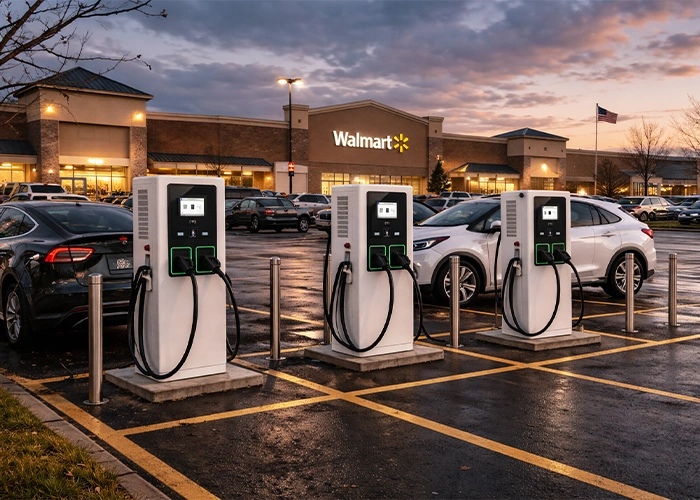
Wall-mounted chargers can reduce the required floor footprint where a suitable load-bearing wall and compliant electrical installation point are available. Pedestal-mounted or floor-standing chargers are often more suitable for open parking facilities.
Plan Cable Reach, Bay Markings, and Service Access
The connectors for charging should be placed in such a way that the driver does not have to move the cable over pedestrian pathways or other car parks nearby. There must be clear signs marking the EV car charging spaces through appropriate pavement markings. Proper pavement markings make the use more comfortable.
Why U-charging for AC Public Charging?
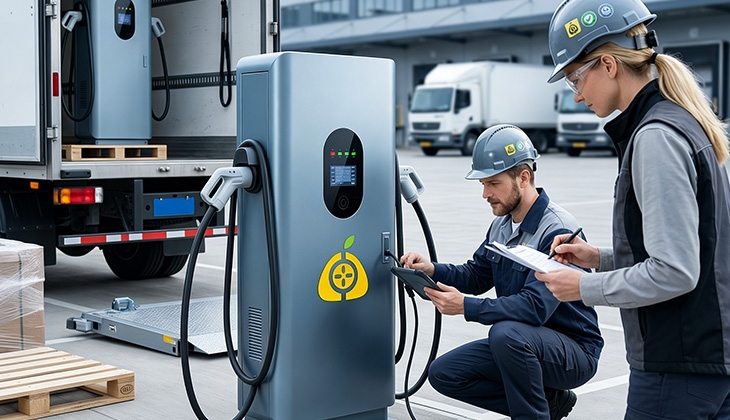
U-charging supports AC public charging projects from planning to long-term operation. For municipal operators, U-charging can help standardize charging infrastructure across public parking facilities, community sites, and government-owned locations. For commercial operators, U-charging provides flexible AC charging options for workplaces, hotels, retail properties, and destination sites.
U-charging AC charging solutions support OCPP-based platform integration, allowing operators to connect chargers with compatible CSMS platforms for remote monitoring, user management, transaction records, diagnostics, and operational control. OEM/ODM services are also available for customers who require customized appearance, branding, functions, or project-specific configurations.
For sites that expect demand to grow over time, U-charging supports phased deployment. Operators can start with a defined number of AC chargers, monitor utilization, and expand capacity based on real charging data. After deployment, U-charging provides technical support and after-sales service to help keep charging infrastructure reliable in daily operation.
Add Smart Management and Connectivity
Use Scheduled Charging and Load Planning
Setting a schedule helps you manage power during busy hours or when electricity is cheaper. This is very helpful for schools and offices where people arrive at the same time. Charging schedules should be configured according to site power limits, operational requirements, and applicable electrical safety requirements.
Apply Dynamic Load Balancing Where Needed
This feature helps several chargers work together within a set power limit. It manages the energy you have, but it does not replace the need for a good electrical setup. Owners should check that their gear is compatible before they count on this function to solve power issues.
Confirm OCPP and Network Requirements
Depending on the model, U-charging AC chargers support connectivity options such as 4G, Wi-Fi, Ethernet, and Bluetooth, with OCPP 1.6J and OCPP 2.0 listed as platform communication options on selected models. Make sure you have good signal coverage at your site for remote checks and updates. These smart features help you manage the station from afar but vary depending on the model you buy.
Plan Phased Expansion
Start With a Defined Public Charging Zone
Begin with high-demand locations that offer favorable electrical infrastructure, accessibility, parking availability, and installation conditions. Monitor charging utilization, session frequency, average session duration, energy consumption, peak demand, and equipment availability. Use what you learn to decide if your next set of chargers should be 7kW, 11kW, or 22kW models.
Reserve Capacity for Additional AC Chargers
During the initial installation, consider installing additional conduits and reserving capacity in the electrical distribution system for future charging points. This can reduce future civil and electrical installation costs and minimize disruption when additional charging points are deployed. Base your growth on real demand from users rather than relying solely on speculative estimates of future charging demand.
Conclusión
AC charging systems provide maximum benefit if the charging capacity corresponds to the individual characteristics of parking and vehicle usage at each location and the local electricity demand. The parking regulations, pricing schemes, authentication process, and payment system must all be clear and user-friendly. Municipal and commercial sites alike may use standardized and reliable charging equipment while adopting their own pricing and operational system.
Explore U-charging AC EV charging solutions to build a network that is easy for drivers to use and ready to grow as more people switch to electric cars. Talk to a U-charging EV charging engineer about your project requirements.
Preguntas frecuentes
Q: What are AC public charging stations used for?
A: AC public charging stations are best suited to locations with extended vehicle dwell times, such as workplaces, hotels, residential properties, shopping centers, campuses, and municipal parking facilities. Municipalities can deploy them in public parking facilities to provide accessible EV charging services for residents, visitors, and local businesses.
Q: Can public AC chargers support remote management?
A: Yes, many U-charging units can connect via 4G or Wi-Fi using OCPP standards. This can enable remote monitoring, configuration, diagnostics, firmware management, and operational status checks, depending on the charger’s model and backend system. While these tools are very helpful for daily management, you still need to perform regular physical checks
to keep everything safe.
Q: What is the difference between AC and DC public charging?
A: AC charging is usually best used where there are longer periods of dwell time, such as in offices, hotels, residences, and destination charging facilities. DC rapid charging is commonly employed when there is a requirement to recharge vehicles quickly, for example, on highways, fleet locations, and high turnover public charging stations.
Q: How many AC chargers should a site install?
A: The required number of AC chargers depends on parking capacity, dwell time, expected EV traffic, available electrical capacity, and the site’s operating model. Many projects start with a defined charging zone, monitor utilization data, and expand in phases as demand grows.
Q: Should I choose 7kW, 11kW or 22kW?
A: Choose 7kW for long-stay parking and sites with limited electrical capacity, 11kW for balanced workplace or municipal charging, and 22kW for sites with shorter dwell times or higher service expectations. The actual charging speed also depends on the EV’s onboard AC charging capability and the site’s electrical supply.