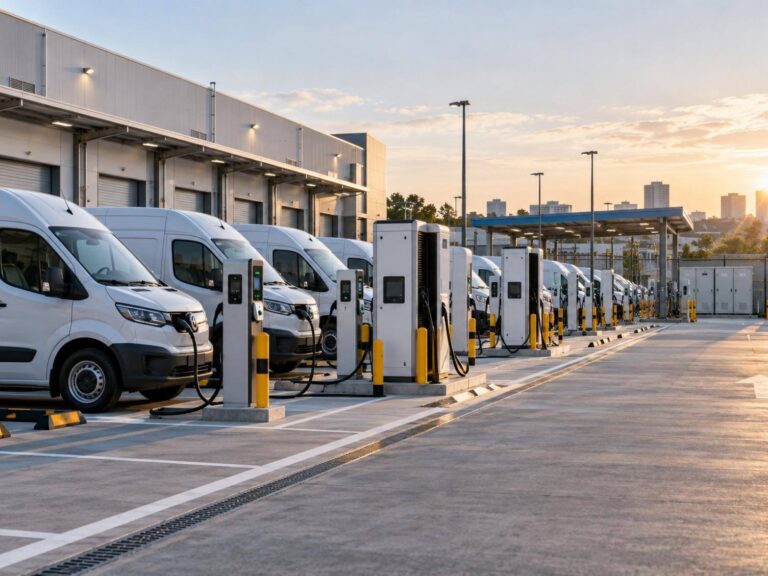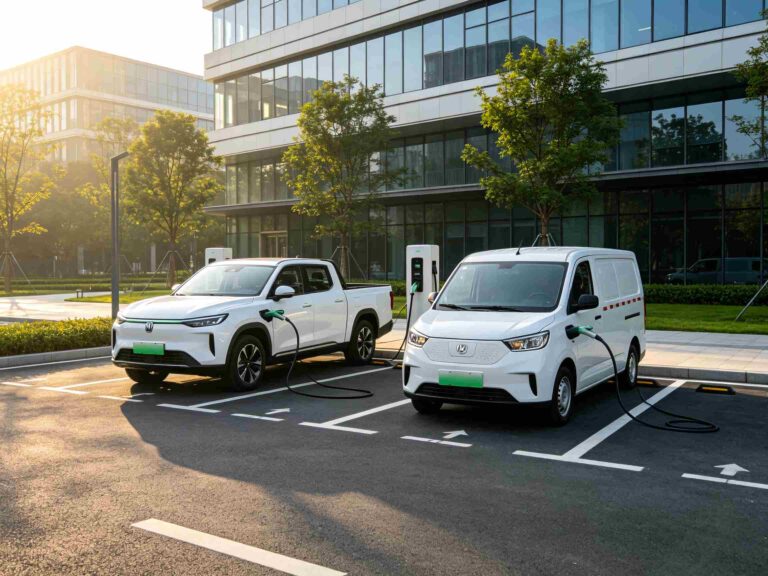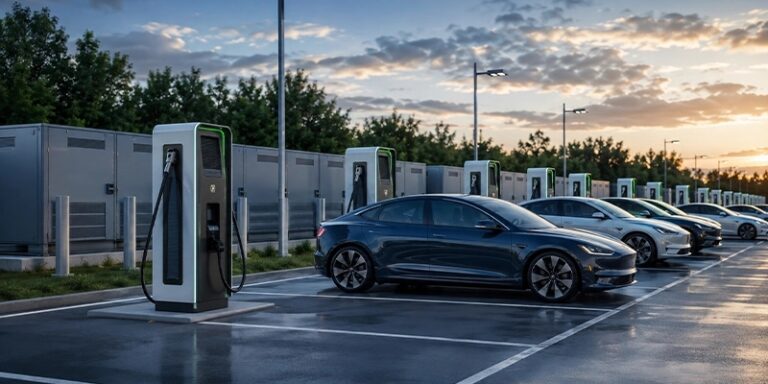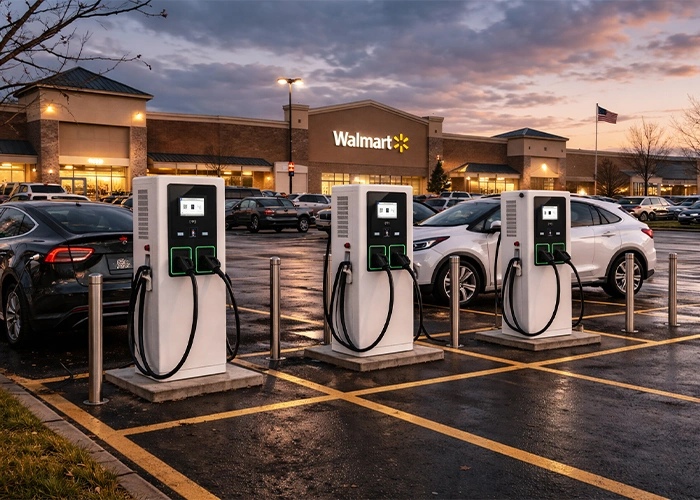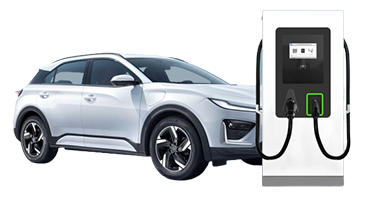
Dynamic Load Balancing for EV Charging is a real-time energy management function that can automatically adjust EV charging power according to available grid connection capacity, site power limits, building loads, and active charging demand when implemented with compatible chargers, metering devices, and a control system.
Carga en U solutions can combine load management, scheduled charging, network connectivity, and AC or DC equipment so offices, hotels, residential communities, parking facilities, and fleet sites can plan charging around available power instead of treating every charger as an isolated load.
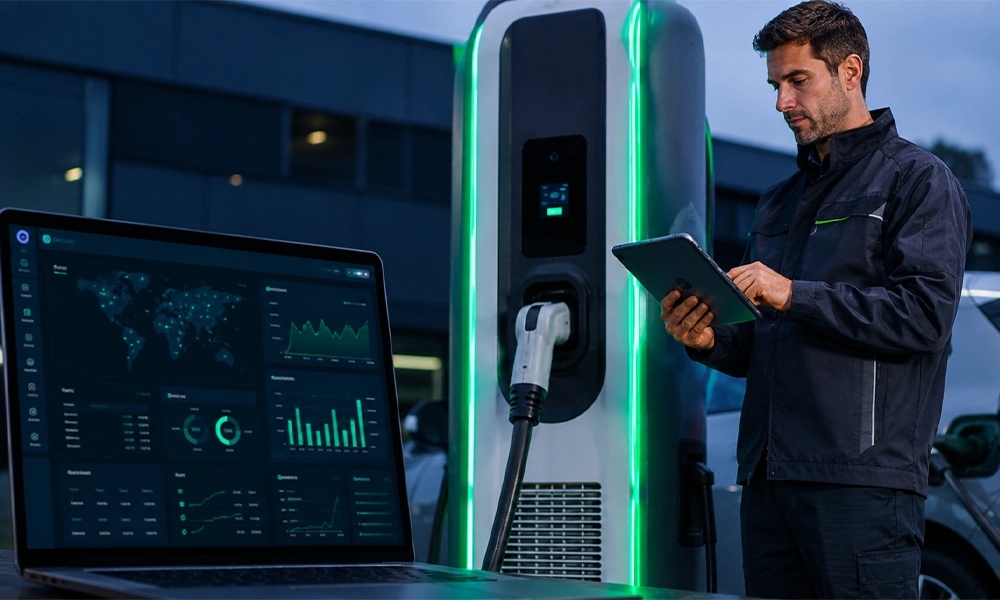
Why Use Dynamic Load Balancing?
Use Available Power Efficiently
Dynamic Load Balancing helps a site use its available electrical capacity more efficiently. Instead of assigning maximum power to every charger at the same time, the system distributes power according to building demand, configured EV capacity, active charging sessions, and operating priorities.
Support More Charging Points
When electrical capacity is limited, load balancing can help a site operate more charging points within a defined power boundary. This allows property owners, fleet operators, and commercial facilities to expand charging access without immediately sizing the entire installation for the maximum theoretical demand.
Reduce Unnecessary Peaks
Dynamic Load Balancing can reduce avoidable charging peaks when multiple vehicles connect at the same time. The system can adjust charging output as building demand or charging activity changes, helping operators maintain the configured site power limit.
Support Phased Expansion
DLB supports a staged deployment strategy. Operators can begin with an initial group of AC or DC chargers, monitor actual utilization, and add more charging points as demand develops. The power management strategy can then be updated to accommodate new equipment within the site’s available capacity.
Dynamic Load Balancing manages available capacity; it does not create new electrical capacity or replace required infrastructure upgrades.
Static Load Management vs Dynamic Load Balancing
| Comparación | Static Load Management | Dynamic Load Balancing |
| Control method | Uses a fixed power limit or predefined allocation | Adjusts power based on real-time site conditions |
| Main inputs | Configured charger capacity and preset rules | Meter/CT data, building load, charger status, and active sessions |
| Response to building load | Limited or no real-time response | Can respond to changes in building demand |
| Power allocation | Usually fixed or manually configured | Dynamically distributed among connected chargers |
| Best suited for | Predictable sites with stable demand | Commercial sites with changing building and charging loads |
| Main benefit | Simple configuration and easier operation | Better use of available capacity and support for expansion |
| Key requirement | Correct initial power settings | Compatible meter/CT, controller, communication, and charger architecture |
| Important limitation | May underuse capacity or create restrictive rules | Does not replace electrical upgrades or qualified system design |
Static and dynamic approaches may be combined depending on the project. The appropriate solution should be selected according to the site’s electrical design, operating policy, charger compatibility, and required level of control.
How Dynamic Load Balancing Works
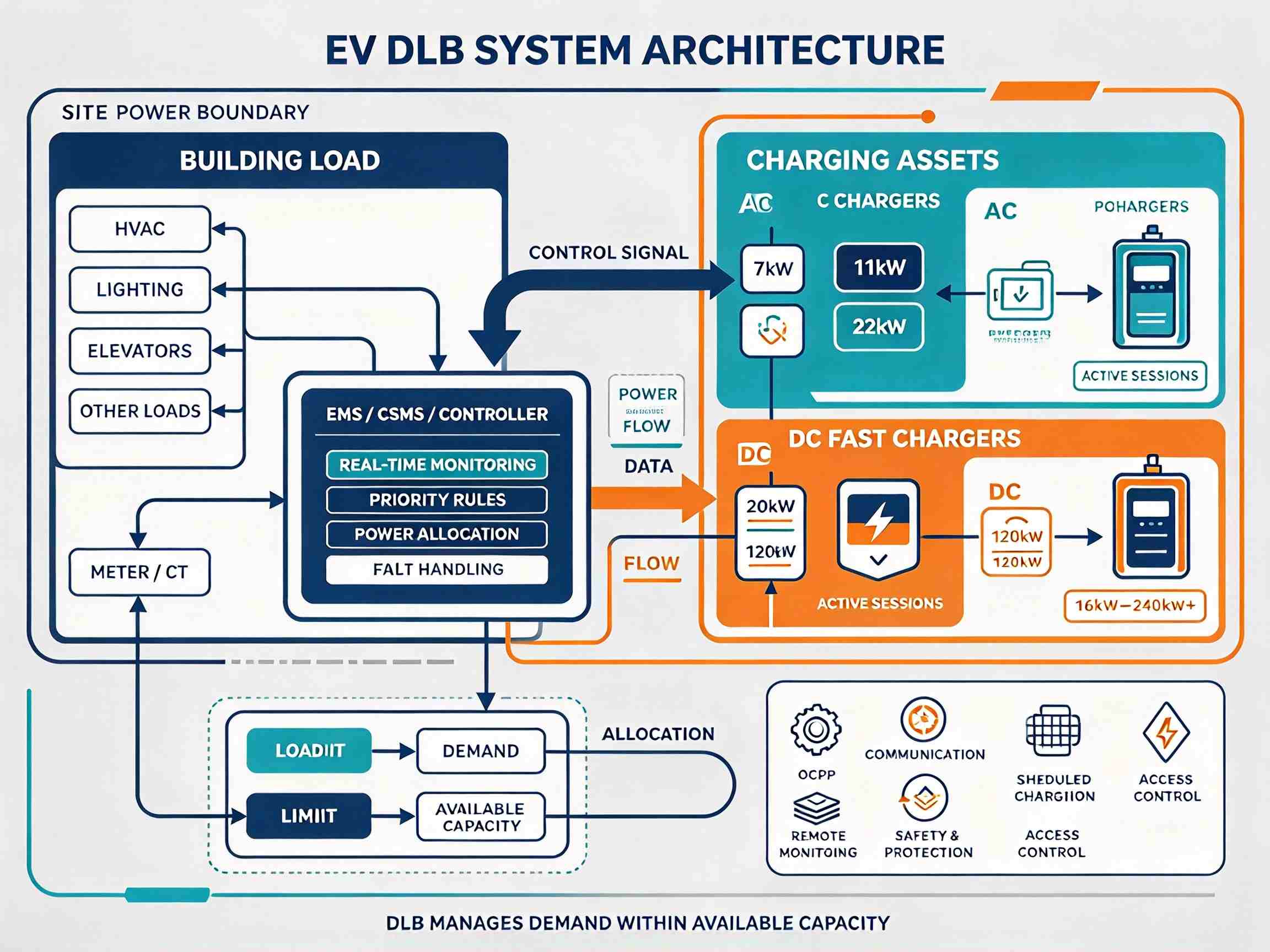
Building Load + Chargers → Meter/CT → EMS/CSMS/Controller → Dynamic Power Allocation.
A Dynamic Load Balancing system measures site demand through a meter or CT system, sends operating data to an EMS, CSMS, or local controller, and dynamically assigns power limits to connected chargers. The exact architecture depends on the charger model, metering method, communication protocol, and site design.
Why Dynamic Load Balancing for EV Charging Matters
Limited Electrical Capacity Is a Planning Constraint
A commercial building may already serve lighting, elevators, HVAC, refrigeration, or production equipment before EV chargers are added. When several vehicles begin charging at once, the site needs an operating method that respects its available electrical capacity and existing infrastructure limits. Load management gives the operator a way to coordinate charging demand with the rest of the property.
More Chargers Require Better Power Management
Installing more outlets does not automatically create a better user experience. If every outlet starts at its highest available demand, the site may face avoidable peaks or restrictive operating rules. A charging management strategy allocates power, charging priority, and charging schedules according to user requirements and operational needs.
How EV Charging Load Management Works
Monitor Site Demand Before Assigning Charging Power
An EV charging load management system, often integrated with an Energy Management System (EMS), monitors configured power limits, active charging sessions, building loads, and connected equipment status. It can then coordinate sessions within the boundaries defined for the site. Commercial projects may use smart meters, CT sensors, or energy management interfaces to monitor site demand. The specific implementation depends on the charger model and installation design.
Balance Multiple Charging Sessions
Dynamic Load Balancing is useful when multiple AC chargers share the same electrical distribution circuit or power source or when a commercial site combines long-duration AC charging with higher-power DC fast charging services. The goal is organized allocation, not a promise that every vehicle receives identical output at every moment. Operators should confirm the power-sharing logic for the chosen equipment.
Apply U-charging Smart Charging Functions
Use Dynamic Load Balancing for Shared Capacity
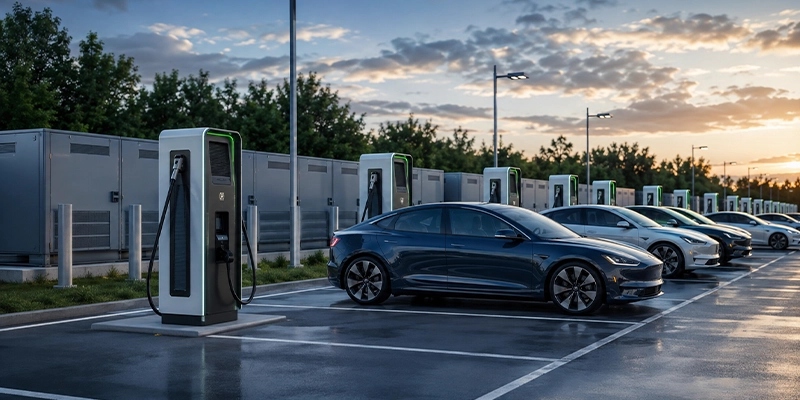
U-charging AC charging solutions support applications including residential communities, workplace charging, hotels, commercial buildings, and destination charging locations. Common AC configurations include 7kW, 11kW, and 22kW. Dynamic Load Balancing can help a shared charging area operate within its planned capacity when multiple vehicles connect.
Add Scheduled Charging for Predictable Parking Windows
Scheduled charging is useful when vehicles remain on site for a known period. Offices can align sessions with workday parking, hotels can manage overnight demand, and fleets can organize charging around dispatch windows. Scheduling should be treated as an operating rule that works alongside load limits, user priorities, and vehicle availability.
Use OCPP-Based Connectivity for Charger Management and Remote Operations
OCPP enables communication between EV chargers and charging management platforms for functions such as remote monitoring, user authorization, charging session management, and firmware updates. OCPP can support communication within a load-management architecture, but actual Dynamic Load Balancing depends on charger capability, metering, and control-system design. The required protocol, network, and backend relationship must be confirmed for the selected configuration.
Match Load Management With AC and DC Equipment
AC Charging for Long-Stay Shared Parking
AC charging is commonly used for workplace charging, destination charging, residential communities, and other long-dwell parking environments. U-charging AC equipment may use wall-mounted, column-mounted, or floor-standing installation. Load management can coordinate several bays without assuming that every vehicle needs the same charging priority.
DC Fast Charging for High-Utilization Commercial Sites
U-charging DC product materials cover 20kW, 30kW, 40kW, 60kW, 80kW, 120kW, 160kW, 240kW, and higher-power systems across different product families. DC fast chargers can serve public charging stations, commercial parking facilities, fleet depots, mobility hubs, and highway service areas. A site may reserve faster DC capacity for time-sensitive vehicles while using AC for longer stays.
Mixed AC and DC Zones
A mixed site should define which bays serve long-stay users and which support high-utilization fast charging operations. This makes load priorities easier to explain and helps operators review capacity by zone. AC chargers, DC fast chargers, dual-port chargers, and split charging systems should be evaluated according to their specific electrical architecture.
Build a Practical Load Management Plan
Define the Site Power Boundary
Start with the electrical capacity assigned to EV charging and identify other loads that share the same distribution path. Then map the number of chargers, expected simultaneous sessions, operating hours, and future expansion space. This information creates a realistic boundary for the control strategy without inventing a universal power formula.
Configure Charging Priority and Power Allocation Rules
Depending on the selected platform and project configuration, commercial charging platforms can define charging priority based on fleet schedules, user groups, reservations, charging deadlines, accessibility requirements, and operational policies. The policy should explain what happens when demand exceeds the configured limit and how a session changes priority. Clear rules make smart charging easier for drivers and site staff to understand.
Keep Safety and Access Controls Connected
Depending on the model configuration, U-charging chargers may include protection functions such as overcurrent protection, short-circuit protection, residual current protection, over-temperature protection, surge protection, and overvoltage protection. RFID authentication, mobile app authorization, and user account management can help control access and identify authorized users. These functions support an operating framework, but they do not replace electrical design, commissioning, or qualified maintenance.
Monitor Performance Without Overpromising Results
Review Alarms and Offline Devices
Remote diagnosis can help operators monitor charger status, communication failures, offline devices, and charging session errors. A useful review records the device, connector, time, symptom, and action taken. This creates a repeatable process without claiming that remote tools can resolve every physical fault.
Use Data to Refine Future Expansion
Charging records can reveal when demand is concentrated, which zones remain underused, and where drivers wait for access. Operators can use those observations to consider additional AC bays, selected DC capacity, or a different priority policy. The data supports planning; it does not guarantee a specific utilization or financial outcome.
Conclusión
When used along with charging software, smart charging, and energy management solutions, Dynamic Load Balancing allows commercial users to make use of the charging station without going beyond the capacity of the electricity supply. Along with scheduling, network selection, remote diagnostics, and proper equipment, it makes charging easy to manage and extend.
U-charging offers configurable AC and DC equipment for properties, public sites, and fleets with different parking and power conditions. Explore U-charging smart charging solutions and develop a load-management policy around the real vehicles, schedules, and capacity of your site. Talk to Our EV Charging Engineer.
Preguntas frecuentes
Q: What is Dynamic Load Balancing for EV charging?
A: Dynamic Load Balancing coordinates active charging sessions within a configured electrical limit. It can help a site manage several connected vehicles while other building loads remain in service. The exact control method, priority behavior, and compatible equipment depend on the selected charger, meter or control system, network, and installation design.
Q: Can Dynamic Load Balancing replace electrical upgrades?
A: No. Load balancing manages demand within an available capacity; it does not create new electrical capacity or replace required infrastructure work. Operators should still review the service connection, distribution equipment, protection, future expansion, and local requirements with qualified professionals before adding chargers.
Q: Is Dynamic Load Balancing suitable for both AC and DC chargers?
A: It can be relevant to shared AC charging areas and to sites that coordinate AC with DC equipment, but behavior depends on the product and control architecture. Operators should confirm whether the chosen devices support the intended load-management function, how priorities are handled, and how the system reports alarms or unavailable chargers.