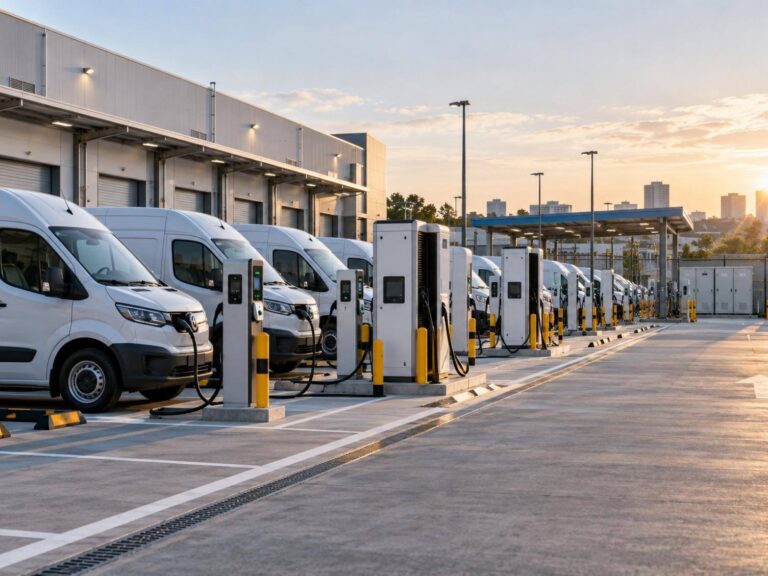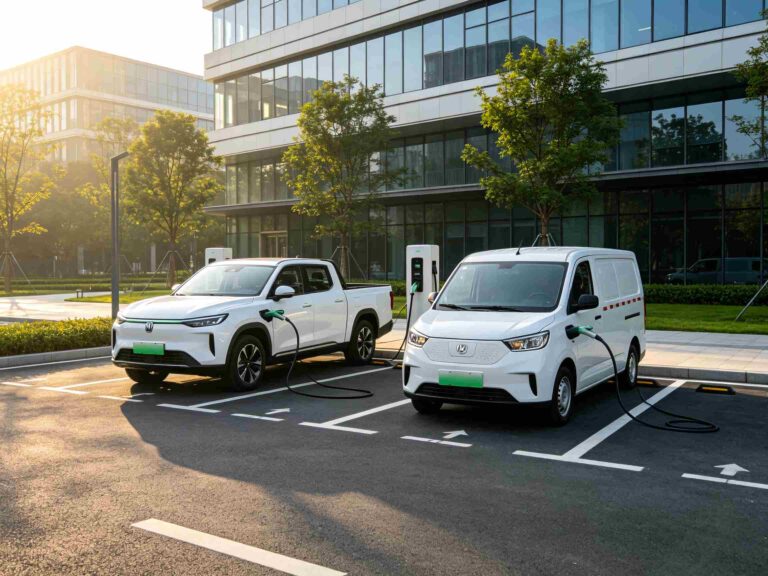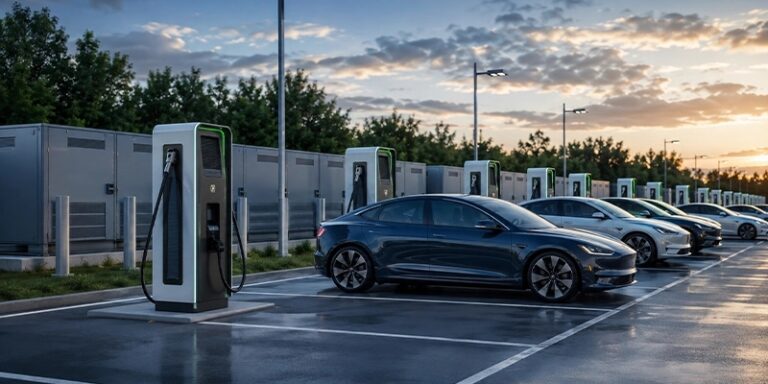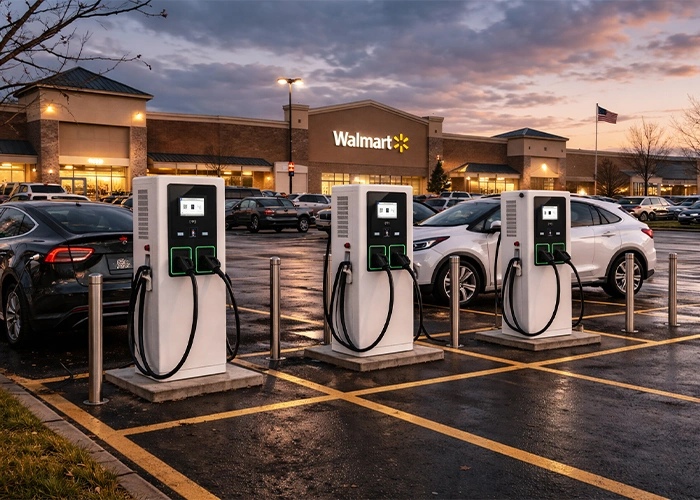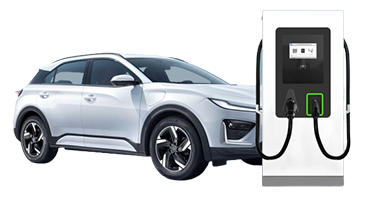
Parking lot EV charging should be designed around vehicle dwell time, required energy per session, vehicle charging capability, and available site power. Where supported by the project configuration, smart charging and dynamic load management can help distribute available electrical capacity across active charging sessions. When properly designed, this approach can help limit aggregate charging demand and reduce the need for unnecessary electrical-service upgrades. This allows operators to assign different charger types and power levels to parking bays with different dwell-time and utilization profiles.
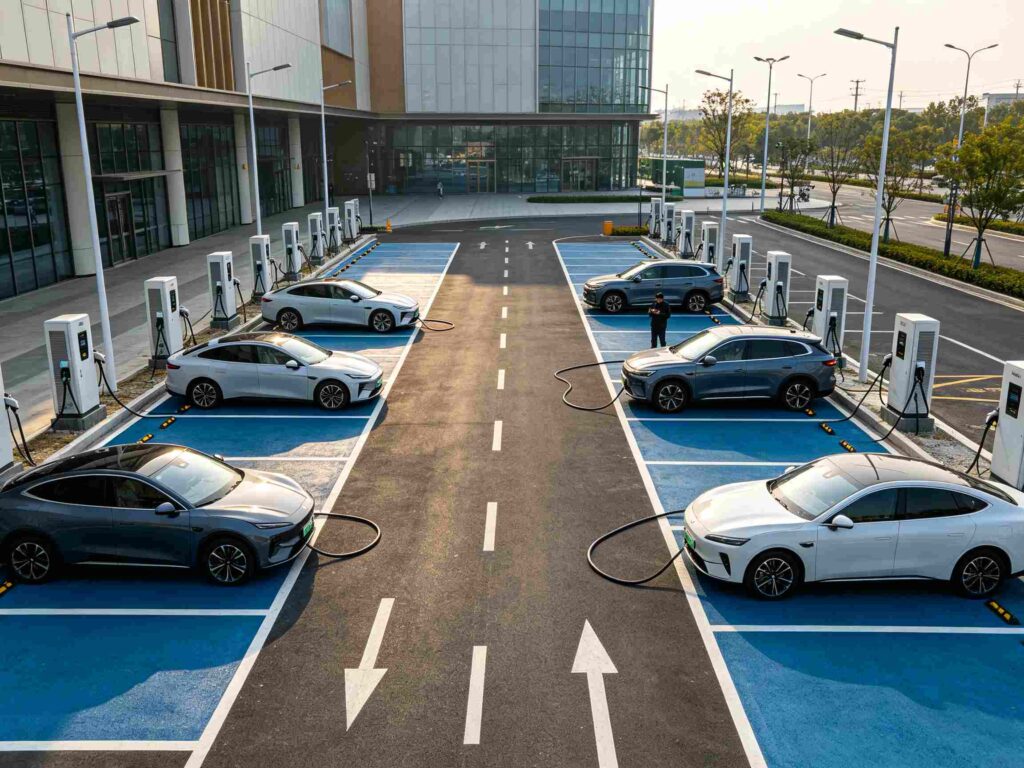
Why Parking Lot EV Charging Depends on Dwell Time
Separate Long-Stay and Short-Stay Demand
Places like workplaces, hotels, or tourist spots often host vehicles for many hours. At these locations, reliable charger availability and sufficient energy delivery during the parking period are generally more important than maximizing charging power. On the other hand, retail and other short-dwell parking locations may instead require dedicated DC fast-charging bays that can deliver more energy within a shorter parking session.
Treat Every Parking Bay as an Operating Asset
Each charging bay combines valuable parking capacity with an EV charging asset, so utilization should be managed from both operational and infrastructure perspectives. A charging bay should therefore be managed as both a parking asset and an energy asset. Operators can evaluate performance through occupancy, charging-session frequency, dwell time, energy delivered, idle time after charging, and overall bay availability. Improving these metrics can increase the value of existing charging infrastructure before additional chargers are deployed. This approach can improve utilization of the installed EV charging infrastructure before additional chargers are deployed.
Why Dwell-Time-Based Charging Improves Parking Operations
Improve Charger Utilization
Matching charger power to expected parking duration helps avoid using high-power DC charging where vehicles remain parked for several hours. It can also reserve faster charging capacity for users who genuinely need shorter sessions, helping operators use installed charging assets more efficiently.
Use Electrical Capacity More Efficiently
A dwell-time-based charging mix allows operators to distribute available site power across different charging needs instead of sizing every parking bay for maximum charging power. The final load-management strategy should be confirmed during project design.
Improve the Driver Experience
Drivers benefit when charging options match their expected stay. Long-dwell users can connect to AC charging without occupying fast-charging bays, while short-stay users can access DC charging where faster energy delivery is needed.
Support Future Expansion
Separating charging demand by dwell time also makes phased expansion easier. Operators can begin with a defined charging zone, measure actual utilization, and add AC or DC capacity according to real operating data rather than overbuilding from the start.
Parking Scenario, Dwell Time, and Recommended Charging Direction
| Parking Scenario | Typical Dwell Time | Recommended Charging Direction | Typical Power Range | Main Planning Focus |
| Hotel / Overnight Parking | 6–12+ hours | AC charging | 7kW / 11kW | Energy delivery during long dwell periods |
| Office / Business Parking | 3–8 hours | AC charging | 11kW / 22kW | OBC capability and simultaneous charging |
| Shopping / Destination Parking | 1–3 hours | AC or lower-power DC | 22kW AC / 20kW–40kW DC | Required energy per visit |
| Retail / Public Parking | 30–90 minutes | DC fast charging | 40kW–120kW | Vehicle DC acceptance and site capacity |
| High-Turnover / Opportunity Charging | Under 30–60 minutes | Higher-power DC | 120kW+ | Grid capacity, charging curve and utilization |
These ranges are planning references rather than fixed rules. Actual charger sizing should also consider vehicle charging capability, battery state of charge, energy required per session, simultaneous charging demand, and available electrical capacity.
Use AC Charging for Longer Parking Sessions
U-charging offers AC charging configurations including 7kW / 11kW / 22kW options for long-dwell parking applications. Depending on your space, you can choose wall-mounted, pedestal-mounted, or floor-standing units.
Add DC Fast Charging for Higher Turnover
DC fast chargers are better suited to short-dwell or high-turnover parking applications where more energy must be delivered within a limited parking period. U-charging DC configurations span lower-power commercial charging and higher-power fast-charging applications; the exact power range should be confirmed against the current product portfolio. A mixed-use site may reserve selected 60 kW or 120 kW DC charging bays for short-dwell users while using lower-power AC chargers for longer parking sessions, subject to vehicle charging capability and site electrical capacity.
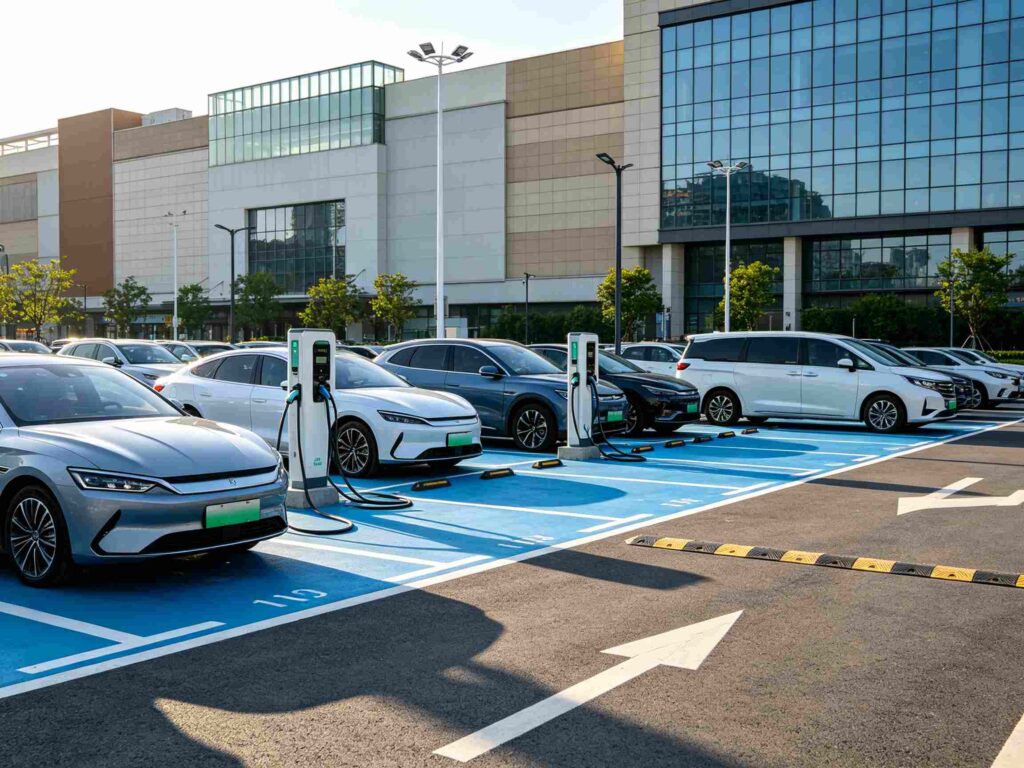
Example: Planning EV Charging for a 100-Space Commercial Parking Lot
A 100-space commercial parking lot should not begin by assigning a fixed percentage of bays to AC or DC charging. Planning should start with actual user behavior and available site power.
- Segment Parking Demand
Separate users by expected dwell time, such as employees, hotel guests, retail visitors, fleet vehicles, or short-stay public users.
- Identify Charging Zones
Group longer-dwell AC charging where vehicles remain parked for several hours, and locate selected DC charging bays where faster entry, charging, and exit are operationally practical.
- Check Electrical Capacity
Review transformer capacity, switchboard capacity, feeder routes, simultaneous charging demand, and whether load management is required. Dynamic load management should only be specified where supported by the charger, metering architecture, backend, and project configuration.
- Expand With Real Utilization Data
Begin with a defined charging zone, monitor occupancy, session frequency, energy delivered, dwell time, and bay availability, then expand AC or DC capacity based on observed demand.
The objective is not to force a standard AC/DC ratio onto every 100-space parking lot, but to build a scalable charging mix around actual parking behavior and electrical constraints.
Design a Parking Lot EV Charging Layout
Place Chargers Around Entry, Exit, and Pedestrian Routes
Locate DC fast-charging bays where vehicles can enter, charge, and exit without disrupting internal traffic circulation. AC charger placement should balance user convenience with cable routing, electrical distribution, accessibility, pedestrian safety, and installation cost. It is also important to keep paths open for disabled access and leave room for technicians to work.
Plan Cable Reach, Protection, and Maintenance Access
Before selecting mounting locations, evaluate pavement conditions, conduit and cable routing, underground trenching requirements, drainage, and electrical-service access. These design details should be adapted to the actual site conditions rather than applying a single standard layout to every parking facility.
Improve Utilization With Smarter Operations
Use Dynamic Load Balancing and Scheduled Charging
Dynamic load management can allocate available electrical capacity across active charging sessions according to predefined site limits and charging priorities where the selected charger, metering architecture, backend platform, and project configuration support this function. Depending on the project design, it can help keep aggregate charging demand within the site’s configured electrical-capacity limit and reduce peak-load pressure on the electrical service.
Set Parking, Reservation, and Bay-Release Rules
A solid plan should explain when a spot is for charging only and what happens when a car stays too long. Using clear signs and phone alerts keeps things fair. Effective bay-release policies can increase charger availability and improve charging-port utilization.
Choose Connectivity and Access Functions
Combine RFID, App, and Card Activation
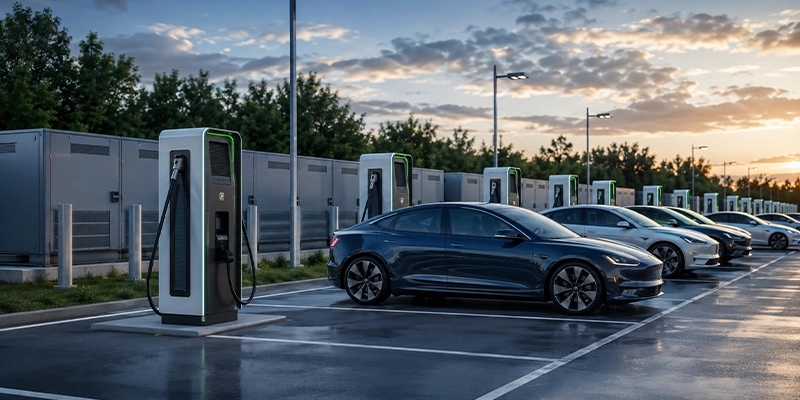
People have different habits when it comes to starting a charge. RFID is suitable for staff or fleet drivers. Depending on the selected charger model and backend configuration, RFID, APP-based activation, and payment functions may be available. POS and local payment support are project-specific and depend on the supported payment terminal, backend platform, payment provider, acquiring arrangement, and target market. These functions should be confirmed before ordering.
Use OCPP and Remote Monitoring Where Needed
U-charging product materials highlight 4G, Wi-Fi, and Bluetooth options. Selected U-charging models support OCPP 1.6J, with OCPP 2.0 available as an option on certain configurations. Buyers should confirm the required protocol version during project specification.
Plan Expansion Without Overbuilding
Start With a Defined Charging Zone
Starting with a defined charging zone allows operators to measure actual parking and charging behavior before committing to wider deployment. Operators can monitor dwell time, charger utilization, peak-use periods, session frequency, and energy delivered. An initial deployment can combine AC charging points with a limited number of DC fast-charging ports based on expected dwell-time segments. Then, use that real-world data to decide where to add more units later on.
Reserve Capacity for Future AC or DC Additions
Future expansion can be simplified by reserving spare conduit, cable pathways, switchboard capacity, transformer capacity, and physical space for additional EVSE. Reserving these elements during the initial project can reduce the amount of rework required during future expansion. Planning for growth is very important if your lot serves different types of tenants or has a changing schedule.
Conclusion
Effective parking lot EV charging starts with how vehicles actually use the site. A well-designed charging mix should balance dwell time, charging speed, charger utilization, electrical capacity, and future expansion rather than applying the same charger type to every parking bay.
U-charging offers AC and DC charging hardware, connectivity options, and project-level solutions for different commercial parking requirements.
Planning EV charging for a commercial parking facility? Talk to Our Engineer about your project.
Frequently Asked Questions
Q: What type of charger is suitable for a commercial parking lot?
A: It depends on how long cars stay. AC chargers are generally suitable for offices, hotels, and other locations with multi-hour dwell periods, while DC fast chargers are more appropriate where shorter charging sessions and higher parking turnover are required.
Q: Should a parking lot use AC chargers, DC chargers, or both?
A: Many commercial parking lots benefit from a mixed AC/DC charging strategy because user groups have different dwell-time and energy requirements. AC charging can serve longer parking sessions, while selected DC fast-charging bays can support shorter-stay users. The final mix should be based on actual demand rather than a fixed AC/DC ratio.
Q: How can parking operators improve EV charging utilization?
A: Divide your spots by how long people stay and set clear rules for when they must move their cars. Where supported by the selected charger, metering architecture, backend, and project configuration, dynamic load management can help control aggregate charging demand. Remote monitoring and clear bay-release policies can also help operators improve charger availability and utilization.