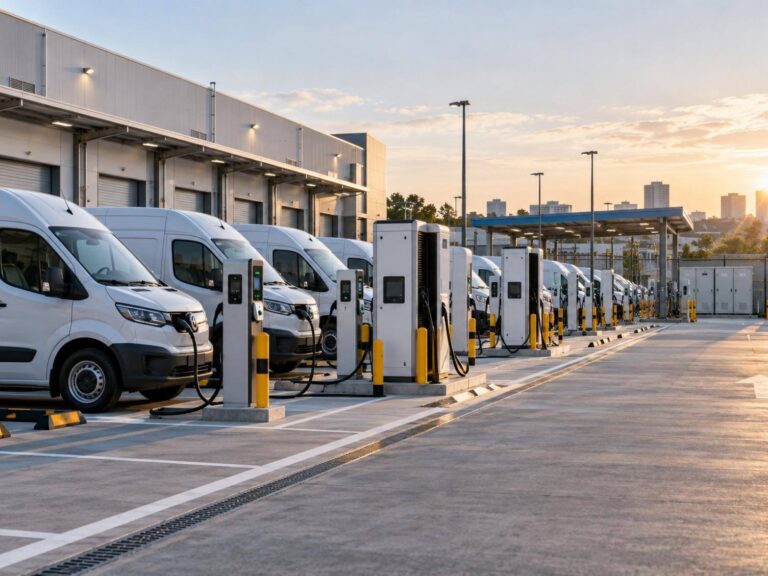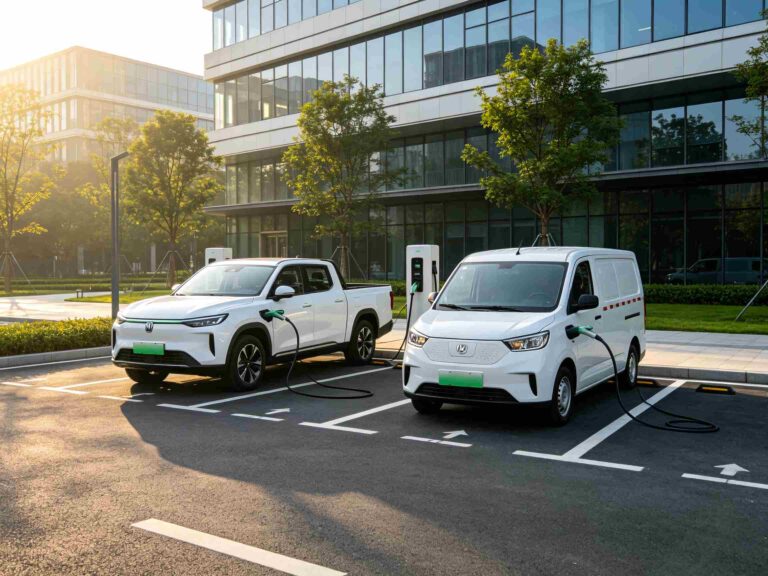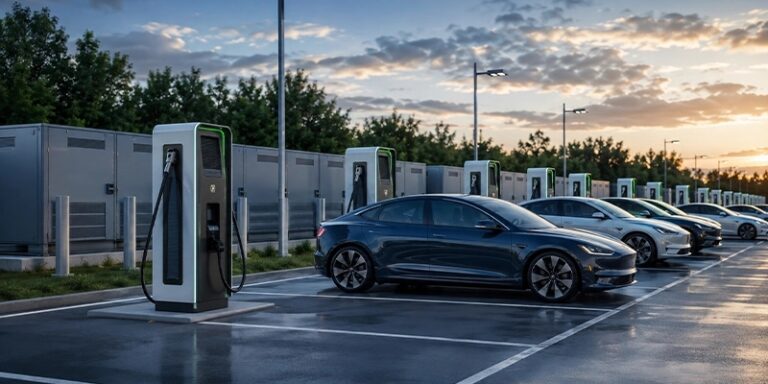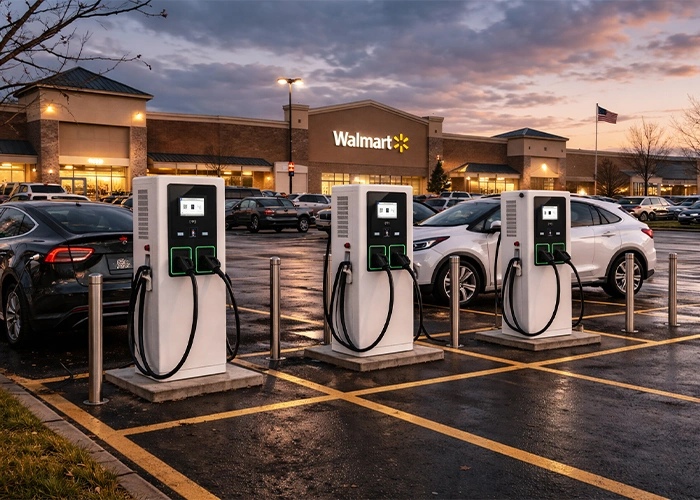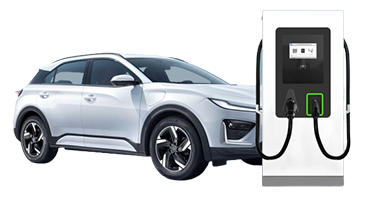
The integrated EV charger is designed for commercial sites that need both faster DC charging and longer-dwell AC charging within a compact installation area. The U-charging integrated charger combines DC and AC charging functions in one floor-standing cabinet. The U-charging integrated charger combines DC and AC charging functions in a single floor-standing unit.
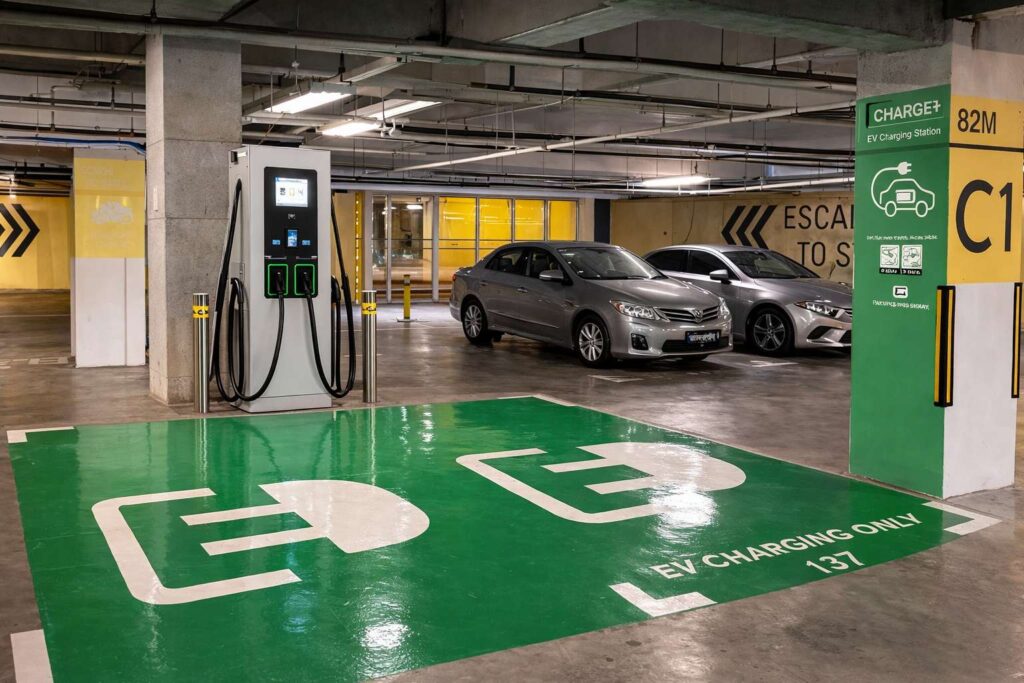
Where Does an Integrated AC/DC Charger Fit?
Commercial Parking
Commercial parking facilities with mixed vehicle turnover can use an integrated charger to provide both AC and DC charging within one compact charging area.
Hotels & Mixed-Use Properties
Hotels and mixed-use properties may serve overnight guests, visitors, employees, and short-stay customers within the same parking area. Providing both AC and DC charging in one compact charging zone can help accommodate these different parking patterns without requiring separate charger cabinets.
Office & Business Parks
Office and business parks typically combine long employee parking periods with shorter visitor or fleet charging needs. An integrated charger can provide different charging modes within one managed commercial charging point.
Compact Public Charging Stations
Compact public charging stations with limited installation space may benefit from combining AC and DC service in one enclosure, particularly where demand does not justify a larger high-power DC charging hub.
Why Choose a 60kW DC and 22kW AC Integrated EV Charger?
Match Charging Speed to the Parking Visit
Commercial parking facilities typically have variable vehicle dwell times throughout the day. Drivers requiring shorter charging sessions can use the DC charging interface, while vehicles parked for several hours can use the AC charging interface. Whether both outputs can operate simultaneously, and the available power under concurrent operation, should be confirmed according to the final product configuration.
Consolidate AC and DC Service in One Cabinet
The U-charging unit combines a 60kW DC charger and a 22kW AC charger in a single floor-standing enclosure. The DC connector configuration should be selected according to the target vehicle market and project requirements. Available DC and AC connector combinations must be confirmed against the official product datasheet and the applicable regional charging standards before ordering.
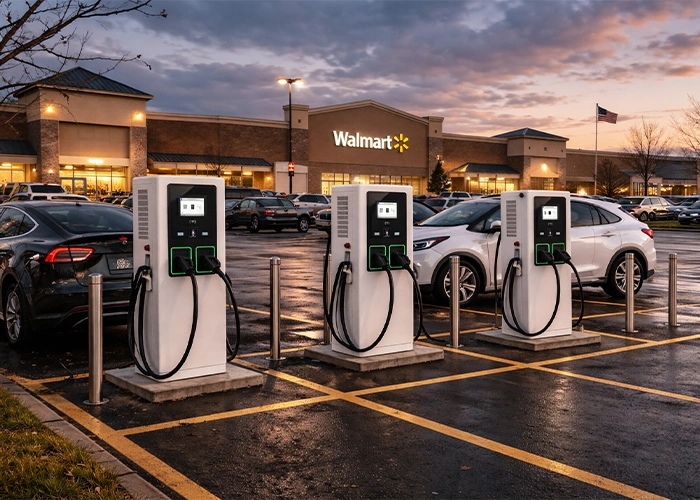
Key Features of a 60kW DC + 22kW AC Integrated Charger
Interfaces and User Access
Depending on the selected configuration, the charger may include a 10.1-inch touchscreen and support RFID-based user authentication. APP-based operation and POS payment functions should be confirmed according to the project platform, target market, and selected commercial configuration.
The interface choices should be mapped to the people who will actually use the station. A workplace may prioritize RFID access, while a public commercial location may need app access and an optional POS workflow.
Connectivity and Back-End Integration
The integrated EV charger supports 4G, Wi-Fi, Ethernet, and Bluetooth connectivity, along with OCPP 1.6J. These options allow the deployment team to choose a primary network path suited to the site and connect the charger to a compatible back-end for monitoring and data collection.
Network planning should be completed before equipment installation. Ethernet can suit locations with accessible data cabling, while cellular or Wi-Fi may be more practical in other layouts. Signal quality, firewall rules, platform compatibility, and remote service access should all be verified during site preparation.
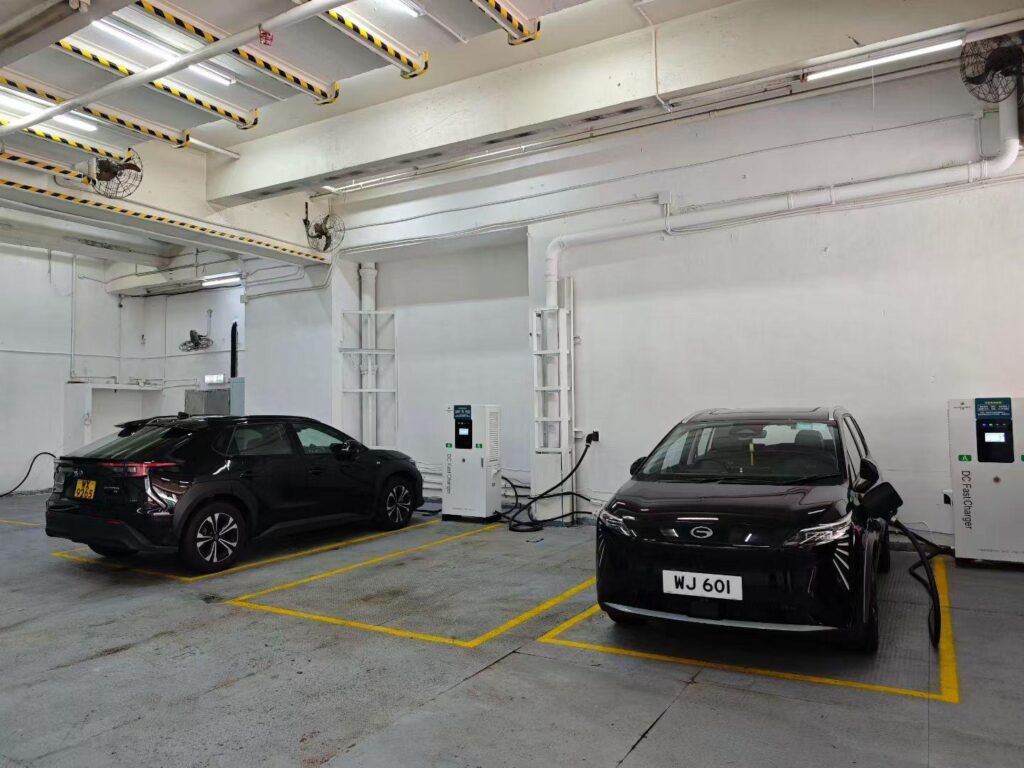
Plan the Charging Zone Around Real Use
Place Bays for Different Vehicle Dwell Times
The DC bay should normally be positioned for convenient entry, a short charging visit, and straightforward departure. The AC bay can serve vehicles expected to remain longer, but its use should not obstruct the high-turnover charging bay. Clear parking geometry is especially important when both interfaces originate from one cabinet.
Cable reach and vehicle inlet location must be checked against the final bay arrangement rather than assumed from a drawing. Protective clearances, wheel stops, drainage, lighting, accessible routes, and the risk of vehicle impact also belong in the site layout review.
Coordinate Electrical Capacity and Operating Rules
A commercial EV charging solution must be evaluated as part of the site’s electrical system. Designers should confirm the available supply, distribution route, protection scheme, grounding, and the operating behavior required under different charging scenarios. No unconfirmed power-sharing behavior should be built into the plan.
Operational rules are equally important. Signage can distinguish short-stay DC use from longer AC parking, while pricing or parking policies can discourage a vehicle from occupying the wrong bay. The objective is to optimize charging bay utilization by assigning suitable charging modes according to vehicle dwell time.
Choose Integration for the Right Commercial Setting
When Separate Chargers May Be Better
An AC and DC charger in one station is not automatically the best design for every property. A large site with many long-dwell bays may need several distributed AC chargers, while a high-turnover charging hub may require more DC capacity than one 60kW interface provides. Separate equipment can also offer greater freedom when bays are far apart.
Separate chargers may therefore be more suitable where charging demand is distributed across a larger site or where independent AC/DC expansion is a priority.
Integrated EV Charger vs Separate AC and DC Chargers
| Selection Factor | Integrated AC/DC Charger | Separate AC + DC Chargers |
| Cabinet Footprint | One combined cabinet | Multiple charger enclosures |
| Bay Distance | Best when AC and DC bays are located relatively close to the charger | Better flexibility when charging bays are distributed or farther apart |
| Site Design | Supports a compact, centralized charging zone | Supports more flexible charger placement across the property |
| Installation Layout | Consolidated equipment location | Separate equipment locations and cable routes |
| Expansion | Expansion depends on available capacity and product architecture | Easier to add chargers independently by charging type |
| User Experience | AC and DC service can be presented through one coordinated product platform | User experience may vary between charger types or platforms |
| Maintenance | Centralized equipment access | Individual chargers can be serviced independently |
| Best Fit | Compact mixed-demand commercial sites | Larger sites, distributed parking, or projects expecting major future expansion |
Is This Integrated Charger Right for Your Site?
Need both AC and DC charging?
→ No: Choose a dedicated charger.
→ Yes: Continue.
Are the bays in one compact zone?
→ No: Separate chargers may be better.
→ Yes: Continue.
Can the site support the required power demand?
→ No: Review the electrical plan.
→ Yes: Continue.
Is large future expansion expected?
→ Yes: Compare separate chargers.
→ No: Integrated charging may fit.
Next step: Confirm connectors, simultaneous charging logic, platform integration, payment setup, and final datasheet details.
Outdoor Installation Requirements for Integrated EV Chargers
Enclosure and Cooling
The charger uses a floor-standing enclosure. Cooling method and enclosure protection rating should be confirmed against the official datasheet for the selected configuration. The charger uses a floor-standing enclosure. Cooling method and enclosure protection rating should be confirmed against the official datasheet for the selected configuration. Where IP54 protection and air cooling apply, installers should still ensure adequate ventilation, drainage, protection from standing water, and sufficient maintenance clearance.
An outdoor plan should also consider direct vehicle impact, debris around air paths, and access for routine maintenance. A visually compact installation can still perform poorly if landscaping, curbs, or adjacent equipment restrict airflow or prevent technicians from opening service areas.
Electrical Safeguards and Ongoing Monitoring
The product includes built-in electrical protection functions to support safe charging operation. Before launch, teams should test user authentication, network communication, connector handling, screen visibility, and vehicle circulation and charging workflow for both bays. A handover that covers both charging modes is more useful than treating the AC interface as an accessory to the DC system.
Conclusion
An integrated AC/DC charger can be a practical solution for commercial sites that need two charging speeds within one compact charging area. Before ordering, confirm the charger’s AC/DC operating logic, electrical requirements, connector configuration, and project-specific software or payment functions against the final product datasheet.
Need to confirm whether an integrated AC/DC charger fits your site? Get Integrated Charging Solution.
Frequently Asked Questions
Q: What is an integrated EV charger?
A: An integrated EV charger combines AC and DC charging functions in one enclosure. The U-charging product pairs 60kW DC charging with 22kW AC charging, allowing a compact commercial site to serve short-stop and longer-dwell vehicles through different interfaces while using one floor-standing cabinet and one coordinated user platform.
Q: How can drivers start a charging session?
A: Available session-start methods depend on the selected configuration. RFID may be provided for local user authentication, while APP-based charging depends on the selected software platform and project integration. POS payment, where available, is subject to the supported payment terminal, service provider, acquiring arrangement, and target market.
Q: Can the 60kW DC and 22kW AC outputs charge two vehicles at the same time?
A: The product provides separate DC and AC charging functions, but simultaneous operation should not be assumed solely from the 60kW DC and 22kW AC ratings. Whether both interfaces can charge vehicles at the same time, the maximum output available to each interface, the maximum combined power, and any dynamic power-allocation logic must be confirmed for the selected configuration.