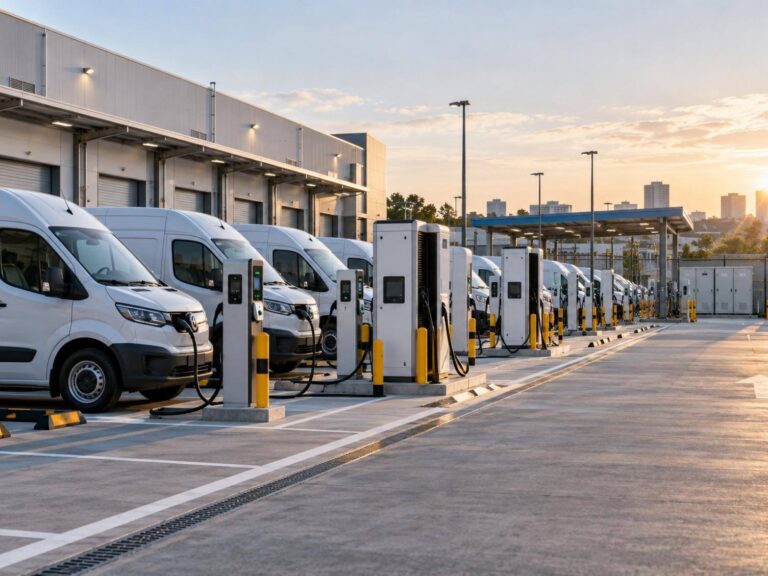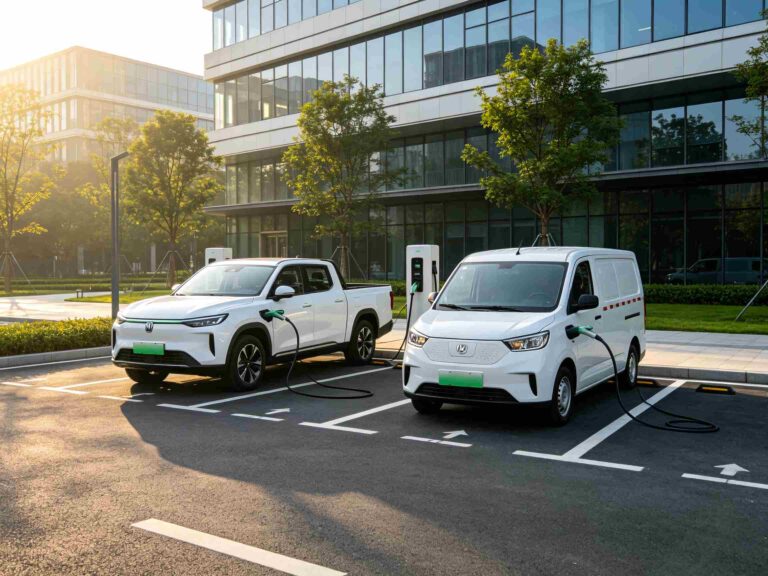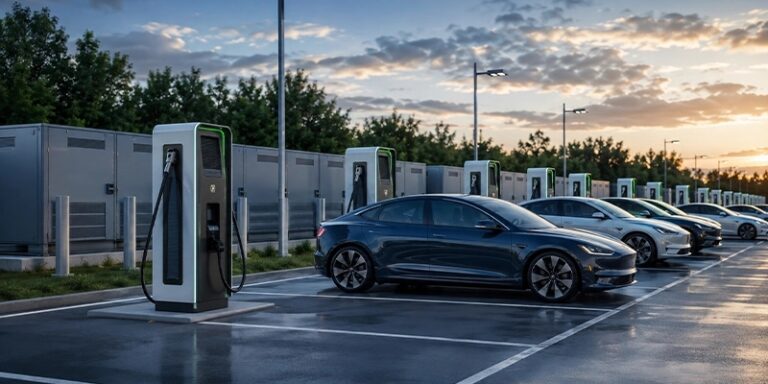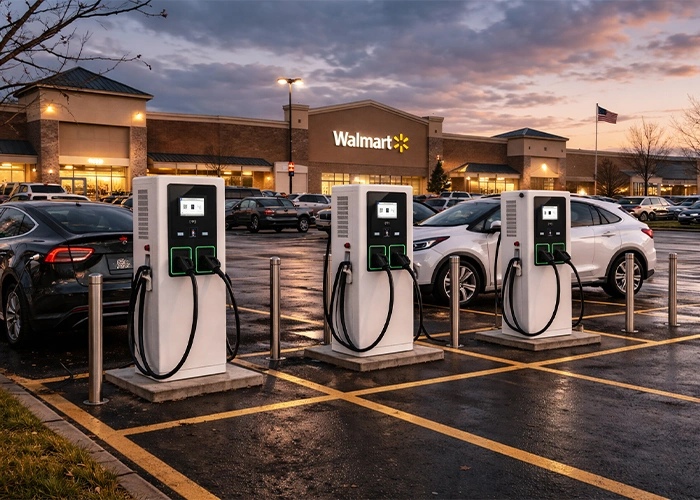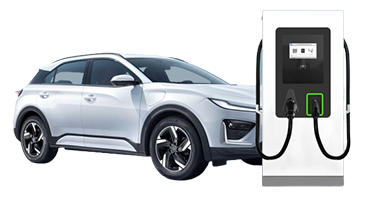
A 40kW / 60kW DC EV charger is a practical choice for compact commercial sites that need higher charging power than AC Level 2 chargers without requiring investment in high-power charging infrastructure. The right design matches charging demand and utilization rate, parking duration, electrical capacity, connector count, installation space, and daily management.
U-charging offers distinct 20kW / 30kW / 40kW, 30kW / 40kW, and 40kW / 60kW DC charger platforms. Their differences in connector configuration, user interface, payment integration, and installation options allow projects to select a platform around specific operating requirements.
Where a 40kW / 60kW DC EV Charger Fits
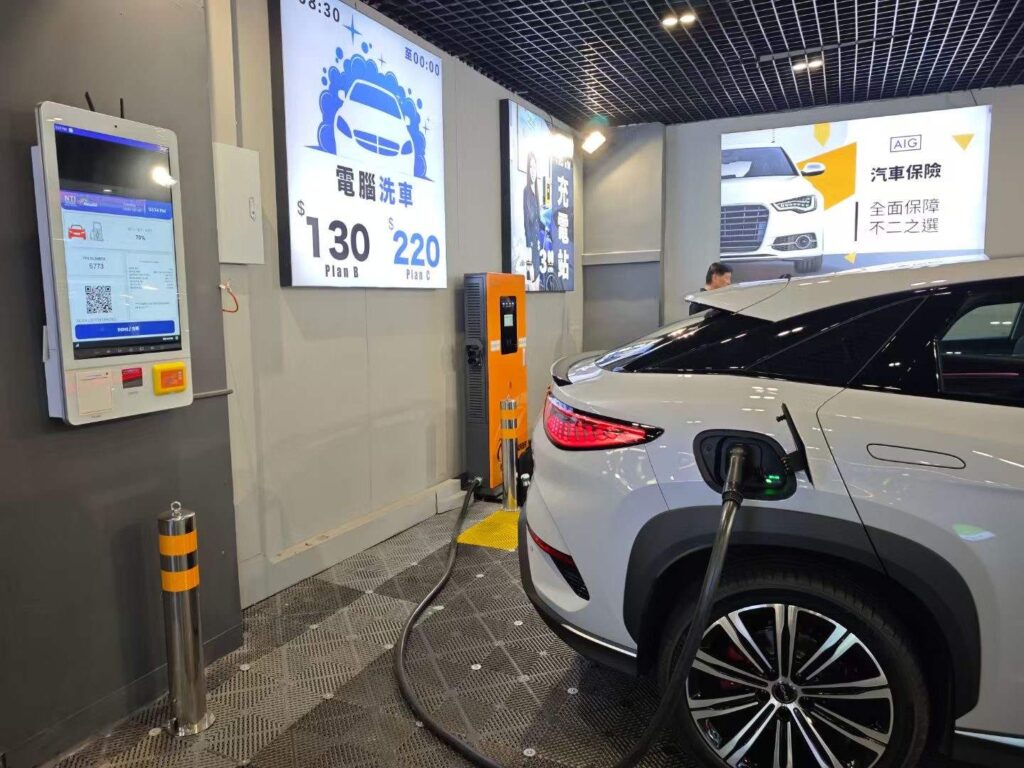
Mid-power DC charging suits sites where vehicles need meaningful energy replenishment within moderate parking periods, without requiring the very short charging sessions associated with high-power highway charging hubs. It can also help projects control space and electrical complexity while providing a dedicated DC fast-charging capability compared with AC destination charging equipment.
Compact Public Charging Stations
The U-charging 40kW / 60kW model is designed for compact public fast-charging stations and commercial parking areas. Its two power versions allow a site to align charger capacity with available supply and expected use without assuming that every location needs the highest possible output.
Campus and Fleet Applications
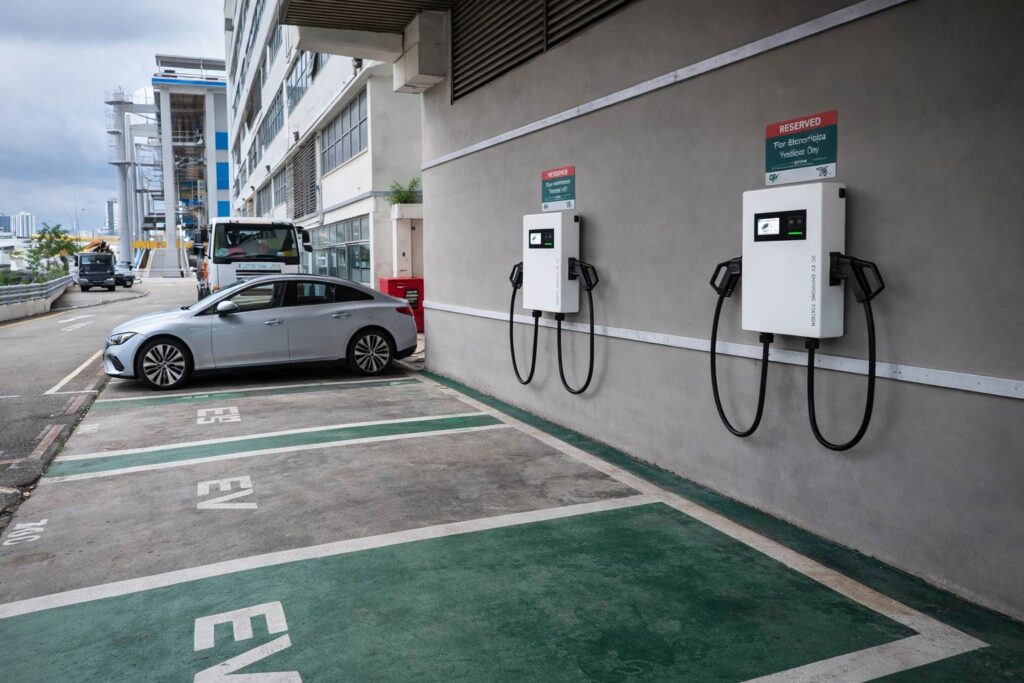
Campus sites and light fleets often combine scheduled arrivals with occasional faster-turnaround needs. A mid-power unit can serve these vehicles when the operator confirms vehicle voltage, charging capability, parking workflow, and the number of sessions expected at the same time.
Why Choose 40kW / 60kW DC Charging?
Parking Time
40kW / 60kW DC charging can fit locations where vehicles stay longer than at highway fast-charging hubs but where AC charging may not replenish enough energy within the available parking period. This makes the power range relevant to commercial parking, workplaces, campuses, and fleet operations with moderate dwell times.
Site Electrical Capacity
Not every commercial site has the electrical capacity or upgrade budget required for higher-power DC charging. A 40kW / 60kW charger can provide DC charging while keeping the project within a more moderate power range, subject to the site’s available electrical capacity and load assessment.
Installation Space
Compact commercial locations may need DC charging without allocating the larger electrical and physical infrastructure associated with high-power charging hubs. Wall-mounted or pedestal-mounted configurations can provide additional installation flexibility where supported by the selected model.
Moderate Charging Traffic
For sites with regular but not continuous charging demand, 40kW / 60kW charging can provide a practical balance between charging throughput and site infrastructure requirements.
40kW vs 60kW: Which Power Level Fits Your Site?
| Selection Factor | 40kW Version | 60kW Version |
| Typical Site Profile | Moderate charging demand | Higher charging demand within the same product platform |
| Parking Duration | Better suited to locations with relatively longer dwell time | Better suited where vehicles need more energy during shorter stays |
| Site Power Capacity | Suitable when available electrical capacity is more limited | Requires additional available electrical capacity compared with the 40kW version |
| Dual-Connector Demand | Suitable where two charging positions are required, subject to confirmed power-sharing logic | Suitable where two charging positions and higher total available charging power are required |
| Best Used When | Site priority is balancing DC charging capability with electrical capacity | Site can support higher input power and wants greater charging throughput |
| Before Selection | Confirm vehicle charging limits, site capacity and simultaneous charging requirements | Confirm vehicle charging limits, site capacity and simultaneous charging requirements |
The charger’s rated power does not guarantee that every vehicle will continuously receive that power. Actual charging output depends on the vehicle, battery state of charge, temperature, charger configuration, and, for dual-gun operation, the confirmed power-allocation strategy.
Key Features of a 40kW / 60kW DC Fast Charger
The U-charging 40kW / 60kW DC EV Charger is available in 40kW and 60kW versions. It uses a dual-gun configuration, includes a 7-inch touchscreen, and supports wall-mounted or column-mounted installation, giving smaller sites flexibility in both user interaction and physical placement.
Dual-Gun Charging Capability
The charger is equipped with two charging connectors for serving two parking positions. When two vehicles are connected, available power is allocated according to the confirmed power-sharing strategy of the selected configuration. The 40kW / 60kW charger rating should not be interpreted as each connector independently delivering the full rated charger power at the same time. The simultaneous charging mode and per-connector output should be confirmed against the official datasheet.
Touchscreen and Start Methods
The 7-inch touchscreen supports on-site charger interaction. RFID authentication is available according to the selected configuration. APP-based operation and payment functions depend on the charging-management platform and project integration and should be confirmed before deployment. POS payment is available as an optional project configuration in selected markets and requires compatibility with supported payment terminals, acquiring services, and local payment providers. Availability should be confirmed for the target country and project before ordering.
Compare U-charging Mid-Power DC Charger Platforms
U-charging offers several mid-power DC charger platforms with overlapping power ratings. The difference is therefore not only the maximum power output. Connector quantity, user interface, mounting, cable configuration, payment integration, communication functions, and installation requirements should also be compared when selecting the appropriate platform.
| Feature | 20kW / 30kW / 40kW – Straightforward Daily Charging | 30kW / 40kW – Enhanced Interaction |
| Power Output | 20kW / 30kW / 40kW | 30kW / 40kW |
| Gun Configuration | Single gun | Single gun |
| Touchscreen | 4.3-inch touchscreen | 5-inch touchscreen |
| Cable Length | Standard 5-meter cable | Standard configuration 5m |
EV Voltage Compatibility and Charging Performance
Confirm Vehicle Voltage and Charging Compatibility
The project should compare the vehicle fleet profile with the charger’s voltage and power configuration. A site serving mixed vehicles needs product-level connector confirmation as well.
Avoid Fixed Charging-Time Claims
No product page provides a universal charging time estimate. Operators should avoid promising a fixed number of minutes, since usable charging power changes by vehicle, battery condition, state of charge, environmental conditions, and how a dual-gun unit manages concurrent sessions.
Design the Installation Around Limited Space
Wall or pedestal mounting gives the 40kW / 60kW and 30kW / 40kW products flexibility at compact sites. The best arrangement depends on wall strength, cable reach, parking geometry, ventilation, drainage, impact protection, pedestrian movement, and safe maintenance access.
Choose Wall or Pedestal Mounting
Wall mounting can preserve floor area where a suitable structure exists. Pedestal mounting can serve open parking or sites where wall access is impractical. The final installation method must follow the specific product documentation and local electrical and construction requirements.
Protect Access and Maintenance Space
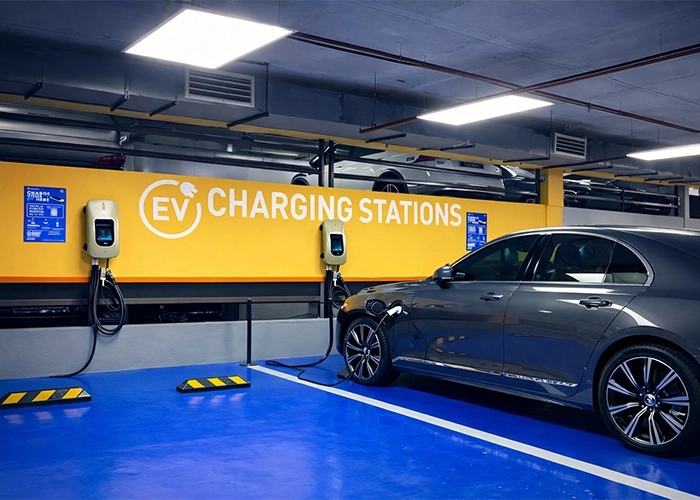
Vehicles should be able to approach, connect, and leave without blocking neighboring bays or circulation routes. Technicians also need access to cooling, connections, protection devices, screens, and communication components without entering an unsafe traffic area.
OCPP and Remote Management for Commercial EV Chargers
The published mid-power products support 4G, Wi-Fi, Ethernet, Bluetooth, and OCPP 1.6J, although the exact purpose and availability should be checked for the chosen configuration. These connections can support integration with remote operation platforms for monitoring and maintenance.
Review Outdoor Protection and Cooling
The 20kW / 30kW / 40kW, 30kW / 40kW, and 40kW / 60kW products use air cooling and state IP54 protection. These characteristics support daily commercial deployment, but site design still needs to account for weather exposure, airflow, drainage, ambient conditions, and the maintenance instructions for the selected product.
When 40kW / 60kW May Not Be the Right Choice
Long-Dwell Parking May Favor AC Charging
40kW / 60kW DC charging is not automatically the best option for every commercial parking site. Where vehicles remain parked for several hours or overnight and rapid energy replenishment is not operationally necessary, AC charging may provide a more appropriate infrastructure approach. The decision should consider dwell time, daily energy demand, vehicle onboard charging capability, installation cost, and the number of parking positions that need charging.
High-Turnover Sites May Need Higher-Power DC Charging
Sites with continuous vehicle turnover, short charging windows, or high daily energy throughput should also evaluate higher-power DC charging. Depending on vehicle charging capability and site electrical capacity, a 120kW or higher DC charger may be more appropriate for high-utilization public charging hubs or fleet operations where minimizing charging time is a primary requirement.
Charger selection should therefore be based on site operation rather than choosing the highest or lowest available power rating in isolation.
Confirm the Final Configuration
Connector type, dual-port power allocation, electrical requirements, dimensions, environmental conditions, payment integration, communication interfaces, and software functions should be verified against the final datasheet and project configuration before installation planning is finalized.
Conclusion
A 40kW / 60kW DC EV charger can provide a practical mid-power option for commercial sites that need faster charging than typical AC destination charging without automatically moving to high-power DC infrastructure. The final choice between 40kW and 60kW should be based on vehicle charging capability, parking duration, electrical capacity, simultaneous charging requirements, installation conditions, and backend or payment integration.
Need help selecting the right charger configuration for your site? Get Charger Recommendation.
FAQ
Q: Where is a 40kW / 60kW DC EV charger most suitable?
A: U-charging’s 40 kW/60 kW model is designed to be deployed in small public fast chargers, commercial parking garages, university campuses, and fleets. This model is appropriate in cases where there is average traffic and a need for faster charging, two connectors, adaptable mounting options, and connectivity without transitioning to a high-power charging hub.
Q: What is the difference between the 30kW / 40kW and 40kW / 60kW models?
A: The main difference is the product platform. The 30kW / 40kW model uses a single-connector configuration with a 5-inch touchscreen, while the 40kW / 60kW platform uses two charging connectors and a 7-inch touchscreen. Other differences, including mounting, communication, payment integration, and electrical specifications, should be confirmed against the selected configuration and official datasheet.
Q: Should I choose a 60kW or 120kW DC charger?
A: The 60kW charger can be considered for use in commercial parking, campus environments, light fleets, among others where there is an intermediate requirement for charging. The 120kW charger can be considered where the number of turnovers per day is high and where there is adequate capacity to take higher amounts of DC charging power. The actual selection should depend on the vehicle charging capacity, daily energy requirement, and the site capacity among other factors.