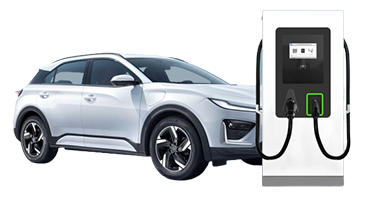
Hotel EV charging stations work best when their power level matches how long guests park. AC chargers are usually the practical foundation for overnight stays, while DC fast chargers can support shorter visits, premium services, or high-turnover locations. A smart hotel layout may combine both, but the final mix should reflect the property’s electrical capacity, parking patterns, and management needs rather than selecting the highest available charging power without considering site requirements.
For U-charging, that choice can include 7 kW, 11 kW, or 22 kW smart AC charging for long-dwell bays and a 120–240 kW low-noise DC fast charger for high-utilization charging locations. The key consideration is not maximum charging speed, but matching charging infrastructure with parking duration, energy demand, and operational requirements.
What Hotel EV Charging Stations Need to Deliver
Hotels serve several charging patterns at once. Overnight guests may leave a vehicle parked for many hours, restaurant visitors may stay for a shorter period, employees may need predictable daytime access, and public drivers may require short-stay charging access with rapid charging capability.
A reliable hotel EV charging solution therefore starts with zoning. Long-stay bays can use lower-power AC equipment efficiently, while a limited number of faster chargers can be positioned where vehicles can enter and leave without disrupting check-in traffic or reserved parking.
Why Hotels Invest in EV Charging
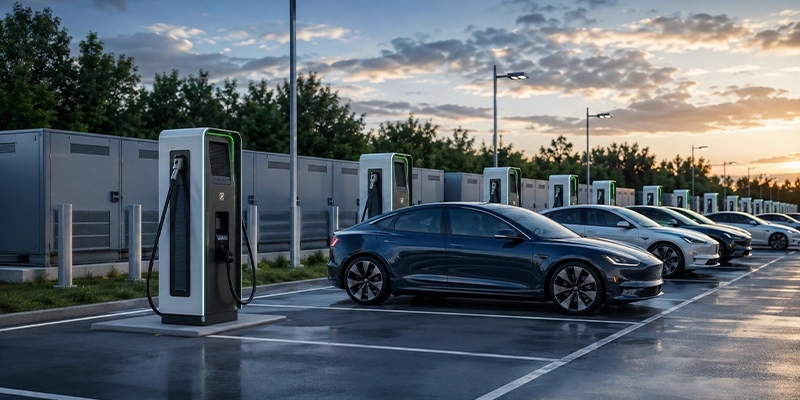
EV charging is becoming part of the guest-service and infrastructure planning process for many hotels. Beyond providing electricity to EV drivers, the right charging configuration can support guest convenience, property differentiation, additional service opportunities, and long-term site readiness.
Improve the Guest Experience
EV chargers allow guests to recharge while they stay, dine, attend meetings, or use hotel facilities. For overnight guests in particular, destination charging can turn normal parking time into useful charging time without requiring a separate trip to a public charging station.
Differentiate the Property
EV charging can strengthen the service offering of hotels that compete for business travelers, road-trip guests, conference visitors, and EV-driving families. A well-planned charging area also signals that the property is prepared for changing guest mobility needs.
Create an Additional Service Opportunity
Depending on the hotel’s operating model, EV charging may be offered as a guest amenity, included in parking packages, restricted to selected user groups, or connected to a paid charging workflow. The commercial model depends on local electricity pricing, payment integration, utilization, and hotel policy.
Build Future-Ready Infrastructure
Planning conduit routes, electrical capacity, communication coverage, and expansion space during the first deployment can make future charger additions easier. Hotels do not need to install the maximum number of chargers immediately, but they can prepare the site for future demand.
Hotel Scenario vs Recommended Charging Configuration
| Hotel Scenario | Typical Parking Pattern | Recommended Direction | Main Planning Focus |
| Resort | Long overnight stays, extended parking | AC-first, with optional DC for selected demand | Guest convenience, multi-hour charging, future expansion |
| Business Hotel | Overnight stays plus daytime visitors | Mainly AC, with limited faster charging where needed | Guest turnover, corporate users, access control |
| Airport Hotel | Short stays, airport transfers, fleet activity | Mixed AC + DC | Faster turnover, transport vehicles, site power |
| Conference Hotel | Event traffic and concentrated arrival periods | AC + selected DC | Peak demand, temporary visitor access, parking flow |
| Roadside Hotel | Shorter stays and higher vehicle turnover | DC-supported mixed configuration | Fast charging access, circulation, public user management |
These configurations are planning directions rather than fixed charger-to-room ratios. Final equipment quantity and power should be based on parking duration, electrical capacity, expected utilization, vehicle mix, and site operating requirements.
AC vs DC EV Chargers for Hotels
AC chargers supply alternating current through the vehicle’s onboard charger (OBC), while DC fast chargers perform AC-to-DC conversion internally and deliver direct current directly to the vehicle battery at higher power levels.
AC charging generally suits longer dwell periods, while DC fast charging is more relevant where faster vehicle turnover is required. The right balance depends on the property’s parking behavior, available electrical capacity, and operating model.
7–22kW AC Charging for Overnight Parking
The U-charging 7kW/11kW/22kW Smart AC EV Charger is available in 7 kW, 11 kW, and 22 kW configurations. It supports wall-mounted or pedestal installation, includes a 5-meter charging cable and touchscreen, and carries an IP55 enclosure rating for long-term outdoor deployment.
These details suit hotel parking layouts where equipment may be mounted on a wall, column, or standalone pedestal. APP control, RFID access, and scheduled charging provide several ways to start or organize sessions, while 4G, Wi-Fi, Ethernet, Bluetooth, and OCPP 1.6J support integration with a Charging Management System (CMS).
120–240kW DC Charging for Faster Turnover
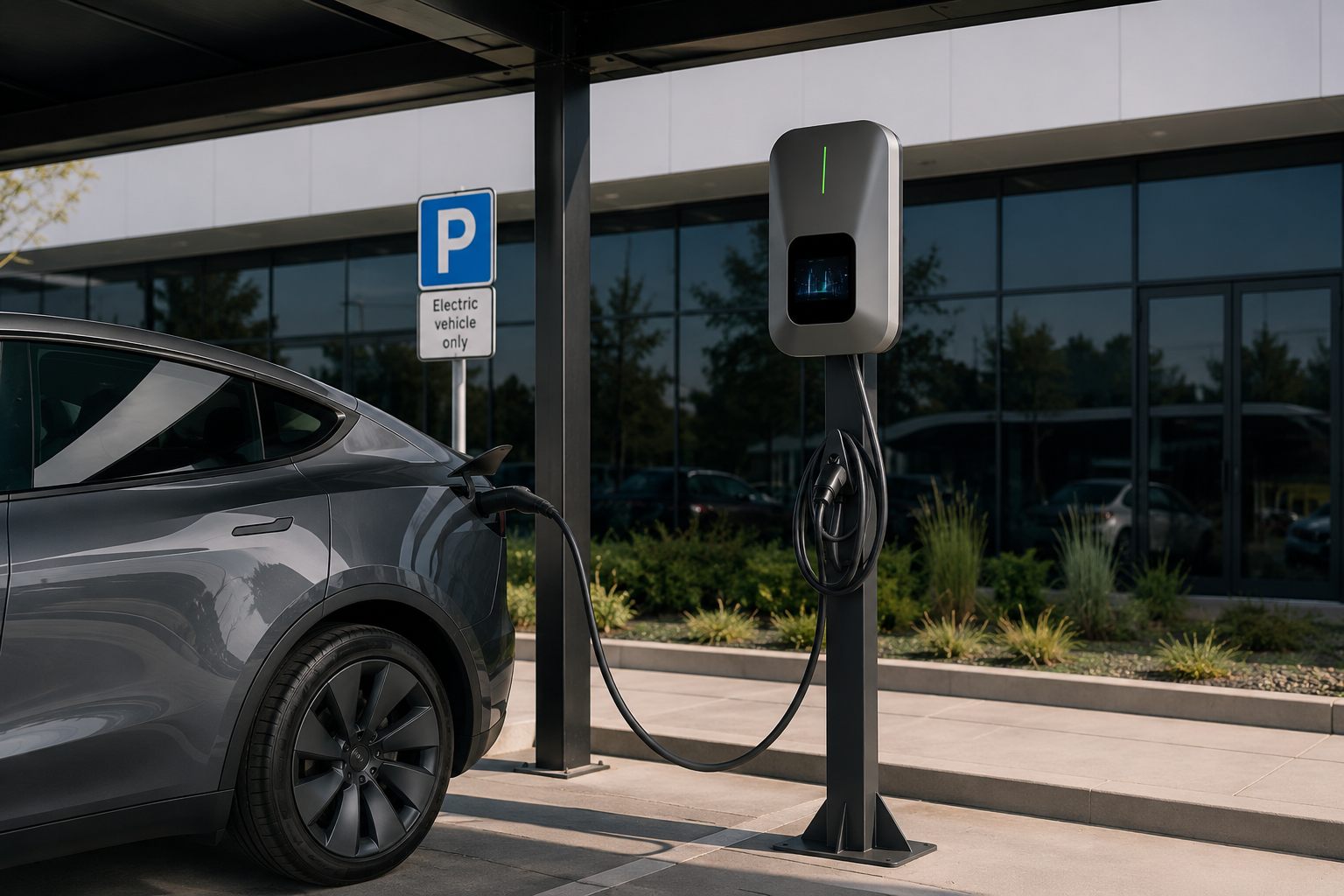
The U-charging 120–240kW Low-noise DC Fast Charger uses a dual-gun structure and provides a 200–1000 V output range. Its 10.1-inch touchscreen supports APP and RFID starting methods, with POS available as an option, and the enclosure is rated IP54.
Its air-cooling system is optimized for lower operating noise, which is relevant when equipment is placed near guestrooms, residential boundaries, or hospitality spaces where noise control is an important consideration.
Smart Charging Features That Support Hotel Operations
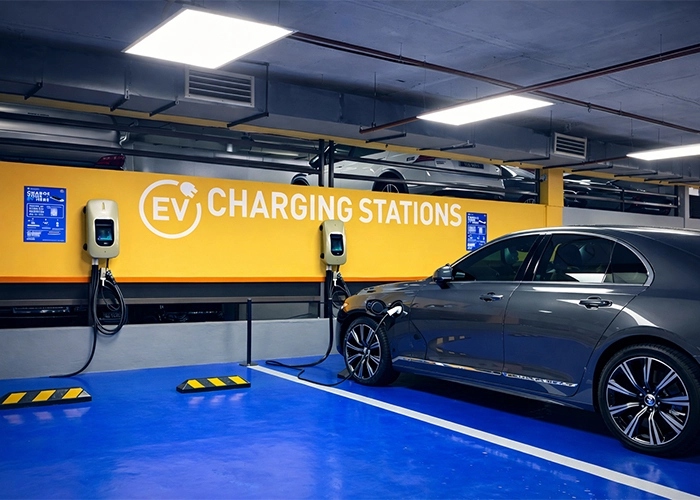
A smart EV charger should make access and oversight easier without increasing workload for hotel staff. Smart charging capabilities can support access, monitoring, scheduling, and energy management. Depending on the selected charger and management configuration, dynamic load balancing may also be used to coordinate charging demand within the site’s available electrical capacity.
Connectivity matters when chargers are distributed across surface parking, garages, or separate hotel buildings. Depending on the selected configuration, U-charging chargers can support network communication options such as 4G, Wi-Fi, Ethernet, or Bluetooth, together with OCPP-based integration for compatible charging management platforms.
Plan Access by User Group
Hotels should define which bays are reserved for guests, staff, restaurant visitors, fleet users, or the public. These access rules should be established before charger placement and management workflows are finalized.
A guest-only AC bay close to overnight parking serves a different purpose from a publicly accessible DC charger positioned near the property entrance.
How to Choose EV Chargers for Hotels
An AC-first configuration is often suitable where vehicles remain parked for several hours or overnight. The choice between 7 kW, 11 kW, and 22 kW should reflect site capacity, expected parking duration, simultaneous charging demand, and vehicle AC acceptance rates.
A mixed AC and DC layout becomes more relevant when the property also serves shorter stays, transport activity, public charging, or higher-turnover vehicle movements.
Hotel EV Charger Installation and Future Expansion Planning
Expansion planning should begin with conduit routes, distribution capacity, parking circulation, cable reach, drainage, lighting, and protection from vehicle impact. Cable length should be confirmed for the selected charger configuration and considered when planning bay geometry, vehicle inlet positions, pedestrian routes, and cable management.
Local electrical, accessibility, fire-safety, and permitting requirements vary by market. Hotel operators should have qualified professionals confirm the final design instead of relying on a universal charger-to-space ratio or a generic installation cost estimate.
Effective installation should provide convenient user access while minimizing interference with hotel operations and guest circulation. Signs, bay markings, lighting, cable management, and reception instructions should make the charging facility easy to locate and use.
Conclusion
The most effective hotel EV charging stations are designed around guest dwell time, vehicle turnover, site power, and operational clarity. U-charging offers AC and DC charging options that can be configured around overnight parking, faster-turnover areas, connectivity requirements, and charging management needs.
Talk to a U-charging engineer to plan the right AC, DC, connectivity, and charging-management configuration for your hotel parking environment.
FAQ
Q: Are AC or DC EV chargers better for hotels?
A: AC chargers are generally better suited to overnight and long-dwell hotel parking because vehicles have more time to charge. DC fast chargers can support shorter visits, transport activity, or premium rapid-charging areas. Many properties can use an AC-first layout and add a limited number of DC chargers where turnover justifies them.
Q: What charging power is suitable for overnight hotel parking?
A: The appropriate power depends on parking duration, electrical capacity, and the vehicle’s onboard AC charging limit. U-charging offers verified 7 kW, 11 kW, and 22 kW AC configurations. A higher charger rating does not mean every vehicle will accept the full output, so site planning should reflect the expected vehicle mix.
Q: How many EV chargers does a hotel need?
A: There is no universal charger-to-room ratio for every hotel. The right number depends on EV demand, parking occupancy, guest dwell time, electrical capacity, charger utilization, and future expansion plans. Many hotels can begin with a smaller AC-focused deployment while preparing conduit, distribution capacity, and parking space for additional chargers later.
Q: Can hotel EV chargers be managed remotely?
A: Yes, when the selected chargers, connectivity method, and backend platform support remote management. A compatible charging management system can help operators monitor charger status, review supported fault information, organize user access, and manage multiple charging locations. Final remote functions should be confirmed according to the selected charger and management configuration.