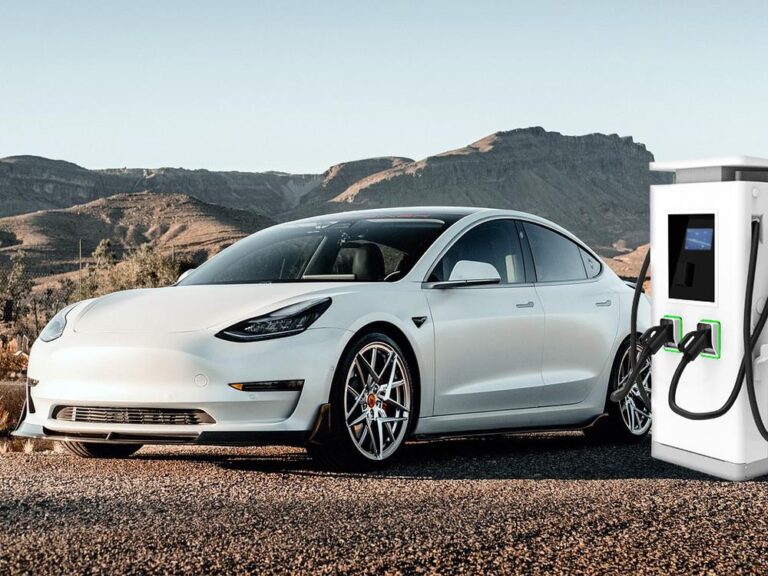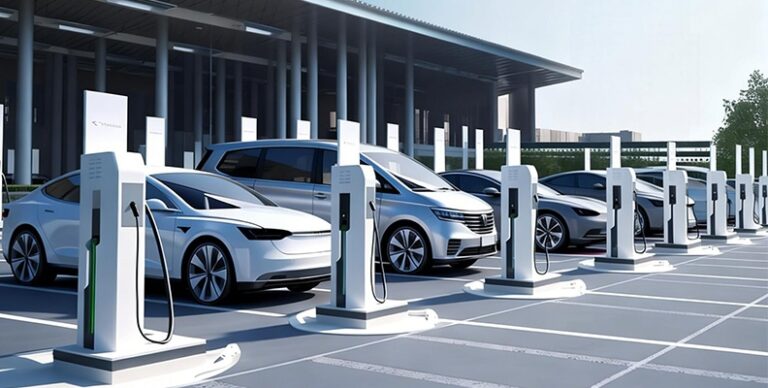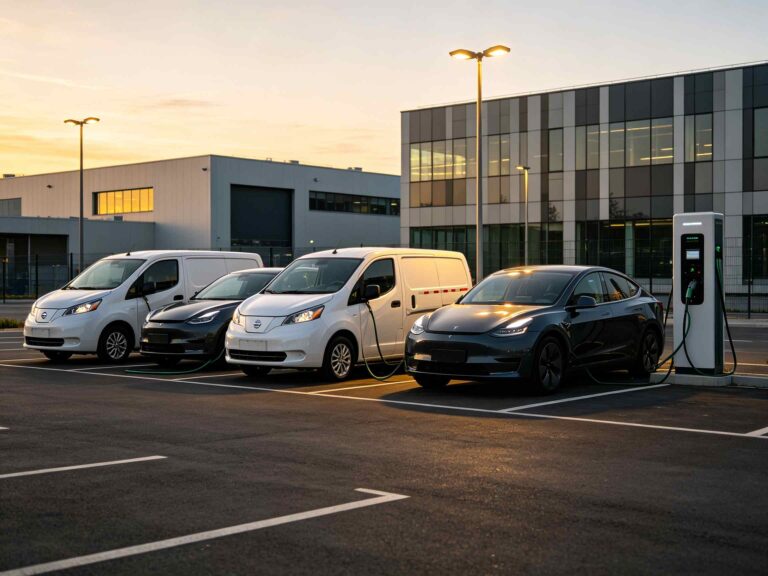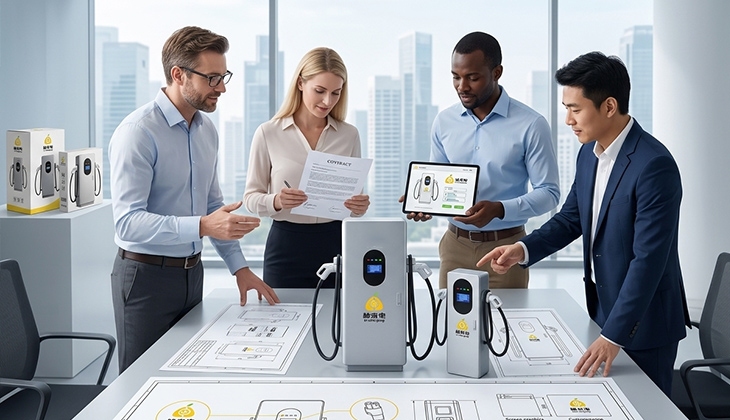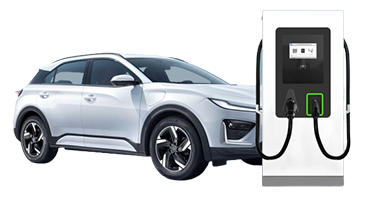
Charging solutions for retail sites should be planned based on charging capability, parking behavior, electrical capability, and operational needs. A shopping mall, grocery store, retail park, or mixed-use commercial site does not need to install the most powerful charger that they can get their hands on. One way of doing site planning is by installing AC chargers for long-term parking spots and selected DC fast chargers for higher turnover spots. Appropriate chargers will depend on the parking duration, energy requirement, charging efficiency, vehicle charging capabilities, and site electrical capability.
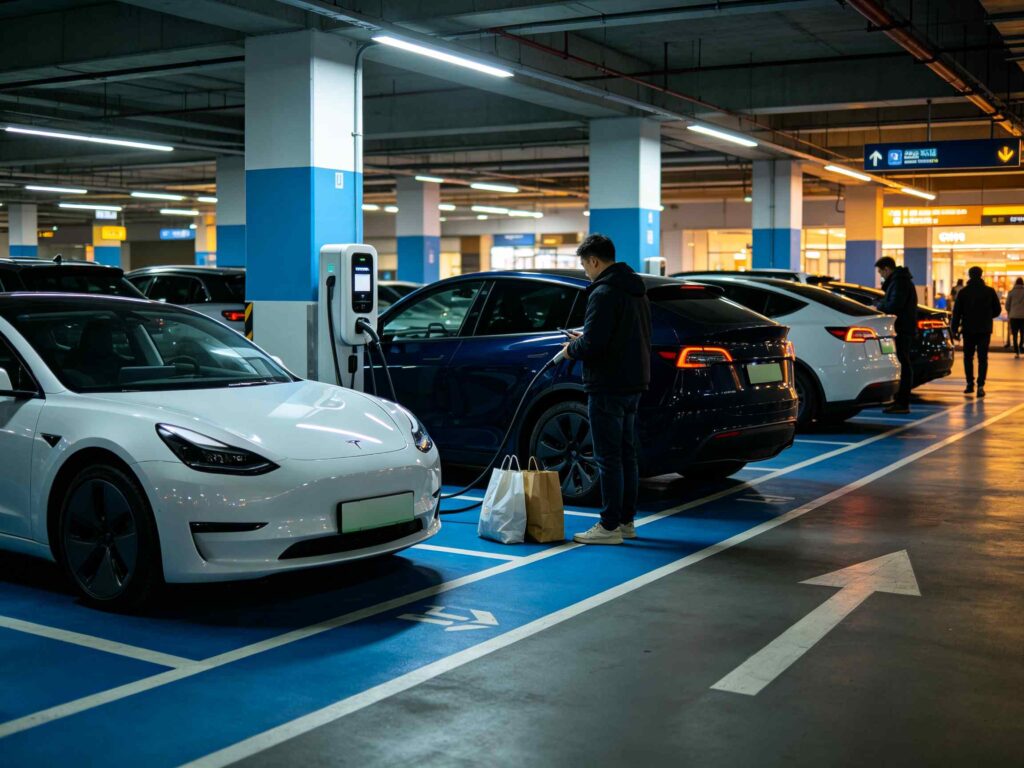
Why Retail Charging Networks Need More Than Charger Power
Match Charging Power to Vehicle Dwell Time
Retail drivers use parking spaces for different lengths of time. A convenience-store visit may last only a few minutes, while supermarket, cinema, dining, and employee parking may involve much longer stays. Vehicle dwell time can range from a few minutes to several hours depending on the retail facility. The choice of charger needs to take into account vehicle dwell time along with energy demand, charging capabilities of the vehicle, power availability of the site, and the expected rate of utilization. Charging using the AC method suits longer periods since the vehicle would be parked for several hours.
The issue for a retail facility is not whether AC is more advantageous than DC or vice versa. Rather, the real issue is to determine the zones that will require continuous charging and those that will require fast-moving traffic. U-charging supports a mixed charging strategy that can combine AC chargers, DC chargers, and integrated AC/DC equipment according to the site’s parking patterns and electrical capacity.
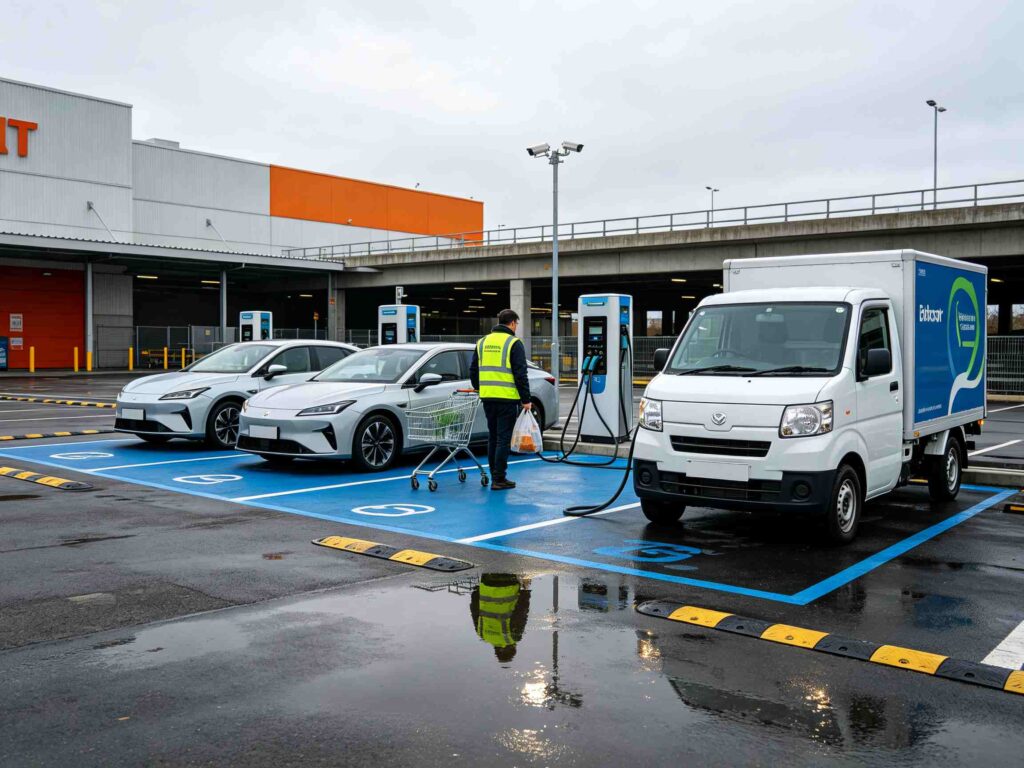
Keep Parking Circulation and Pedestrian Routes Clear
Charging infrastructure at retail facilities needs to be designed according to the existing human flow around the facility. The location of charger cabinets, bollards, the length of the cable, access for disabled persons, delivery routes, and pedestrian crossing points need to be checked out prior to installation of any equipment. A charger layout should help reduce vehicle-pedestrian conflicts, keep circulation routes clear, and support accessible use. Avoiding unnecessary reversing can improve traffic flow and usability, but the final layout should be based on the site geometry, vehicle movements, accessibility requirements, and local regulations.
One way of doing this would be to provide long-dwell AC charging stations at designated long-stay parking areas, as well as fast-charging DC stations which are strategically placed for effective management of vehicle traffic, circulation, visibility, and turnover. Lighting, signage, screen visibility, card/app access, and maintenance access all impact the driver experience post installation.
Choose the Right Retail Commercial EV Charging Solutions
Use AC Chargers for Destination Parking
U-charging AC EV chargers are suitable for destination charging at commercial parking lots, office buildings, hotels, and retail locations where vehicles stay for several hours. U-charging offers AC chargers in 7kW, 11kW, and 22kW configurations, as well as dual-gun commercial AC models.
AC charging is quite suitable for retail workers, restaurant customers, movie-goers, members of the gym, and people who carry out multiple activities in a single trip. Depending on the electrical design and management of loads, AC charging can facilitate the installation of more charging points within a specific electrical capacity budget for a location. However, the final decision should be based on acceptance by the vehicle, single-phase or three-phase power, cable layout, and installation type.
Add DC Chargers According to Retail Turnover
DC charging can be useful where vehicles stay for shorter periods or where selected bays need to support higher turnover. The appropriate DC power level should be determined by the expected dwell time, energy demand, vehicle charging capability, site electrical capacity, and the number of charging sessions expected during the day.
Convenience stores may benefit from compact or mid-power DC chargers for short visits. Supermarkets and shopping centers may combine AC chargers for longer stays with selected DC bays near higher-turnover areas. A retail site does not necessarily need DC chargers in every bay.
Higher-power DC charging, such as 120–240kW, may be considered for busy retail locations when shorter dwell times, vehicle demand, and available electrical capacity justify it. 240–480kW should be presented as an optional solution for large retail charging hubs or other high-demand applications, rather than as the default requirement for ordinary retail parking.
The rated output describes the charger’s maximum equipment capacity and does not guarantee that every vehicle will charge at that power. Actual charging performance may be affected by the vehicle’s charging limit, state of charge, connector, battery temperature, charger configuration, and available site power.
Consider Integrated AC DC Equipment for Compact Sites
The DC 60kW + AC 22kW integrated charger integrated charger provides DC and AC charging in a single floor-standing cabinet. It supports simultaneous operation at full rated output, delivering up to 60kW DC and 22kW AC, with a combined output of 82kW. This configuration allows retail sites to serve vehicles with different parking durations within a compact equipment footprint. The electrical supply must be sized according to the confirmed input specifications and installation requirements.
Product Options for Retail and Commercial Sites
AC Charging for Long-Stay Parking
The AC charging range with power output of 7kW, 11kW, and 22kW is designed for use in destination parking, employee parking, hotel parking, commercial buildings, and shopping malls where longer duration stays occur. The 22-42kW AC charger with two guns expands the commercial configuration by offering options of APP, RFID, and POS, along with OCPP 1.6J, IP54, and five meters cable/socket choice.
Low-Power and Mid-Power DC for Flexible Turnover
U-charging supplies mid-power DC charger models in the 20-40 kW, 30-40 kW, and 40-60 kW classes. Such chargers can be used in convenience retail facilities, commercial parks, office car parks, and in other areas where a large DC charging system is not feasible for various reasons.
Higher-Power and Low-Noise DC for Busy Retail Locations
Where noise is a planning constraint, a 120–240kW model listed as a low-noise option may be considered for retail or urban commercial sites. Any noise-related claim should be supported by a verified noise value, measurement distance, operating condition, and applicable local limit.
If test data is not available, the charger should be described as a potential option for noise-sensitive projects rather than as a product that automatically meets all residential or site-boundary noise requirements.
| Retail need | Suitable charging approach | Points to confirm |
| Long-stay parking | 7kW, 11kW or 22kW AC chargers | Connector type, access method, platform compatibility and electrical design |
| Shared commercial bays | Dual-gun AC chargers, where appropriate | Whether APP, RFID, POS and OCPP are available on the selected model |
| Moderate turnover | 20–60kW DC chargers | Output range, connector configuration, network method and vehicle compatibility |
| Mixed compact site | Integrated DC 60kW + AC 22kW equipment | Simultaneous output, input requirements and installation conditions |
| Busy retail hub | 120–240kW DC chargers, where justified | Utility capacity, expected turnover, vehicle demand and site layout |
| Large retail charging hub | 240–480kW DC as an optional solution | Project scale, grid capacity, high-power demand and confirmed product availability |
Smart Management for Multi-Site Retail Networks
Connect EV Chargers to a CSMS via OCPP
Before deployment, confirm the exact OCPP version supported by the selected charger and the charging management platform. Depending on the selected model, platform, and project configuration, the system may support OCPP 1.6J or OCPP 2.0.1.
OCPP 1.6 and OCPP 2.0.1 are not directly compatible. The charger version, CSMS version, gateway requirements, and supported functions should therefore be checked before backend integration. Both APP and RFID would help with user authentication/session initiation, and POS terminal would help with implementing payment flows if such capabilities are available. This is important since retail charging is the operation service, and not just a hardware purchase. The site staff should understand if the charger is operational, if the user can begin charging, and if the payment flow would work.
Apply Load Planning Before Expansion
Load Balancing and Scheduling Charging will assist the chargers that are compatible in adhering to the set power restriction in the charging site. The two techniques are applicable if the retail facility is planning to install many charging stations but does not have enough power for all of them.
Prior to expansion, the following should be taken into consideration by the operator: the capacity of the transformers, the distribution path, protection system, earthing, network coverage, conduit, and service clearance. It will facilitate the process in future phases.
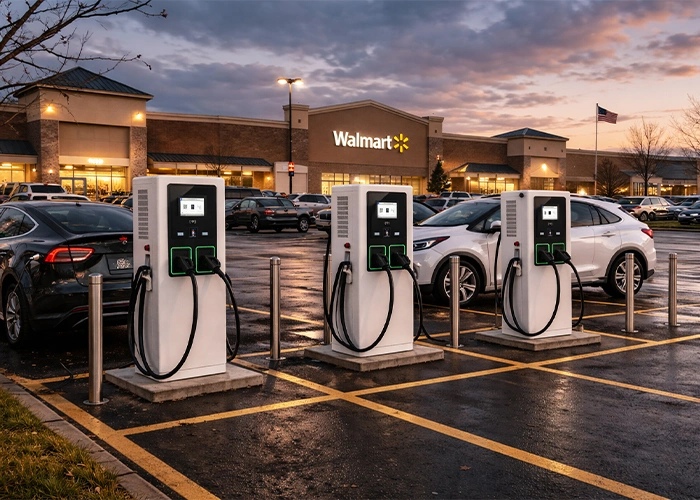
How U-charging Supports Retail Charging Deployment
U-charging can support retail charging projects with charger configuration, technical documentation, backend integration coordination, installation and commissioning guidance, operator training, and after-sales service, where these services are included in the selected project scope.
The exact support available depends on the country, project requirements, selected products, platform, and service agreement. Product configuration, payment integration, site electrical work, and parking-system integration should be confirmed separately during project planning.
Conclusion
Retail EV charging infrastructure is more effective when it reflects actual parking duration, charging demand, site capacity, and operating requirements. AC chargers support destination parking, selected DC chargers support faster turnover, and integrated equipment can help compact sites serve both needs. A site-specific charging strategy should start with dwell time, circulation, electrical capacity, access policy, and expansion planning.
U-charging brings together AC chargers, DC fast chargers, integrated charging equipment, OCPP connectivity, access methods, and smart management functions for commercial deployment. Explore U-charging EV charging products to design an AC and DC charging infrastructure based on site requirements and future expansion plans.
Planning a retail EV charging project? Share the project country, retail format, number of parking bays, average parking duration, available electrical capacity, expected turnover, and payment requirements. U-charging can then help identify a suitable AC, DC, or integrated charging configuration based on the confirmed project conditions.
Explore U-charging EV charging products for retail charging applications.
Frequently Asked Questions
Q: Does Bluetooth replace OCPP or an internet connection?
A: No. Bluetooth, where available, is generally used for local commissioning, configuration, diagnostics, or service operations. Backend functions such as remote monitoring and platform communication require a compatible network connection and supported protocol configuration.
Q: Does RFID or APP activation mean that payment is supported?
A: Not necessarily. RFID or APP functions may identify a user or start a charging session. Payment may additionally require a POS terminal, payment service provider, billing platform, and project-specific integration. The available functions depend on the selected model, platform, and project configuration.
Q: Is scheduled charging the same as dynamic load management?
A: No. Scheduled charging controls when charging is allowed to operate. Dynamic load management adjusts charging power according to real-time site conditions and may require compatible meters, control equipment, or an energy management system.