I’d judge workplace EV charging solutions by how easily people can use them during an ordinary day at work. AC equipment can serve cars parked through office hours, and selected units offer APP or RFID activation. Choosing the equipment involves the vehicles and available supply, but deciding how people will share it is just as necessary.
A meeting doesn’t necessarily end when a car finishes charging. A visitor may know nothing about the equipment until they arrive. Those are perfectly ordinary circumstances to plan for, rather than exceptions to deal with later.
Workplace EV Charging Solutions Start With Daily Use
Employee Charging and Visitor Needs
Compare a car left outside all day with a visitor’s car brought in for a meeting. They have very different opportunities to charge. I would ask about actual arrival and departure times before offering the two drivers an apparently identical service.
The phrase employee EV charging can mean quite different things to the people using it. An occasional top-up is one expectation; depending on a space several days a week is another. I would want to hear both views before announcing a sharing rule.
Finding the bay and starting a session are new jobs for a visitor, but they can become routine for an employee. That difference is worth accommodating in the instructions. A newcomer needs enough help to get started; a returning user probably wants to get indoors and on with the day.
Choosing AC Charging for the Working Day
Matching Charger Output to the Vehicle
AC charging involves the vehicle’s onboard charger. A power rating on the equipment therefore cannot establish the result for every car in the office. The available supply and the vehicle’s own charging capability belong in the same discussion.
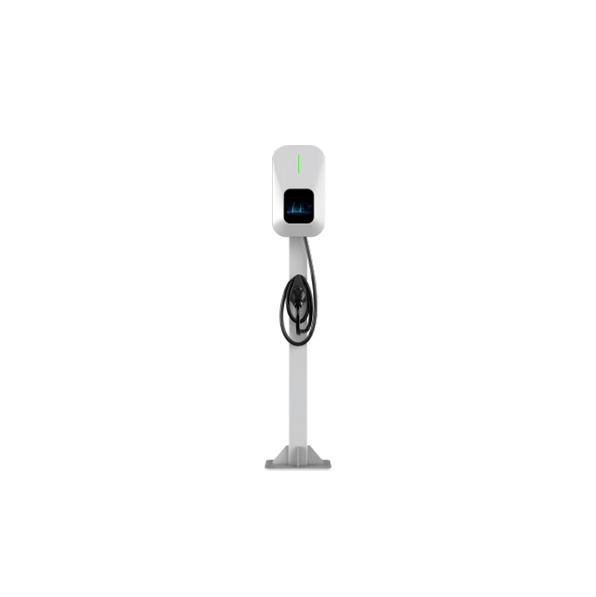
The 7–22kW Smart AC EV Charger from U-Charging gives the workplace a choice of 7kW, 11kW or 22kW configurations. It also offers wall or pedestal installation, with a standard five-meter cable. I would consider those physical choices while looking at the actual bay, rather than leave placement until the power rating has already been settled.
Start the performance discussion with what employees need when they leave. A top-up during office hours and a service someone expects to rely on every day are different promises. Without the vehicle and its starting conditions, a fixed charging time would tell either user very little.
Single-Gun and Dual-Gun Layouts
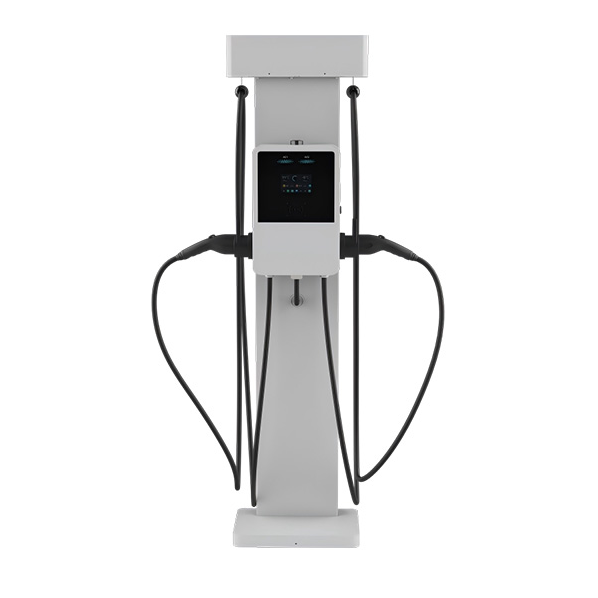
A suitable wall beside a bay may make a single-gun unit a practical choice. Where two neighboring spaces share an equipment position, a floor-standing dual-gun format offers another layout to consider. Include the way both vehicles enter and park when comparing those positions.
The U-Charging 22–42kW Dual-Gun AC Charger combines a floor-standing format with APP and RFID activation. A five-meter cable configuration and a socket option are available. Confirm the selected version’s power allocation before describing what two cars will receive during simultaneous use.
Making Shared Charging Easier to Use
APP and RFID Access
Try the starting procedure with somebody unfamiliar with it. If that person hesitates at a step, there is probably an explanation missing. Office EV charging should be straightforward enough for a regular user to repeat without having to call reception each morning.
A card reader gives RFID EV charging its familiar starting action. Behind it, somebody has to issue access and know whom to call when a card fails. Before promising employee groups or visitor permissions, establish those arrangements with the backend; the reader is not evidence of integration with other office systems.
Clear Rules for Shared Parking Spaces
An immediate-move rule effectively asks people to leave whatever they are doing when charging ends. Would that be realistic in this office? Allowing a move at a break may be easier to live with, although it leaves a question about the next driver’s wait.
There is little point announcing a rule the office cannot comfortably follow. Look at meeting schedules, access to the parking area and how much demand there is for each bay. Visitors sharing the equipment need to hear the arrangement too.
Give people a way to report an occupied bay when no charging is taking place. Tracking down an unfamiliar colleague through another department is an awkward task to leave with the waiting driver. Building management can settle the reporting route alongside its parking policy, independently of the commercial AC EV charger itself.
Putting Chargers Where Drivers Can Reach Them
Wall, Pedestal and Floor-Standing Installation
I would be wary of approving a layout solely from an empty parking space. Add the cars and the people walking towards the entrance to the picture. It should still be possible to collect the connector comfortably, without having to squeeze around the equipment or the neighboring vehicle.
A nearby wall is one possible home for the unit; a pedestal or floor-standing format gives other positions to explore. Each takes up space differently. I would look from the neighboring bay as well, since a convenient position for one driver can be awkward for the person parking beside them.
Cable Reach and Parking Layout
Where is the inlet on the cars people will bring to work? That small detail changes the route the cable has to take, as does parking nose-in or reversing into the bay. Try the proposed position against the expected vehicles while it is still easy to adjust the layout.
The standard five-meter cable on relevant U-Charging AC configurations is a dimension to work with on the layout. Trace its route to the inlet of a normally parked car. I wouldn’t take the length alone as evidence that every vehicle can connect comfortably from any position.
Look at where people walk, too. If the cable would have to cross that route, I’d go back to the equipment position before asking users to live with it. The car park team can help judge how much room there really is around the bay.
Keeping Workplace Charging Manageable
Connectivity, Monitoring and Maintenance
Who would reception call if a driver came indoors asking for help? It is worth answering that question while the installer and building team are still discussing the service. Users shouldn’t have to work out how responsibility has been divided before they can report a failed start.
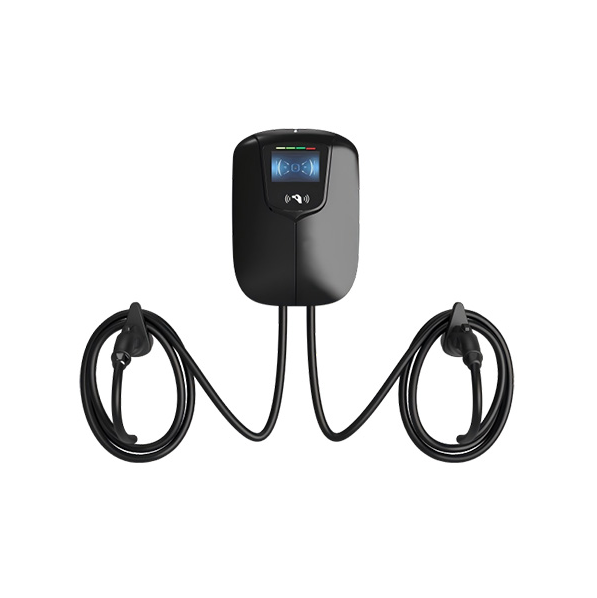
OCPP 1.6J, remote monitoring, diagnostics and upgrades are available on selected U-Charging AC equipment. I’d ask the future facilities users to look at those functions on the intended platform. Giving somebody an account is a poor handover if the information on screen still needs explaining.
If there is pressure on the spaces, spend some time understanding it. Cars charging throughout their stay suggest a different question from cars left after their sessions have ended. That distinction gives the discussion about extra equipment or a revised sharing rule a sensible place to begin.
Conclusion
Workplace EV charging solutions become a useful daily service when employees know how to share the spaces and building staff know how to support the equipment. U-Charging’s AC formats offer mounting and connector choices for that planning process. Explore the 14–42kW AC EV Charger when considering connected charging for your office parking area.
FAQ
Q: Which EV chargers suit employee parking?
A: AC equipment can serve cars parked during the working day. Begin with what employees expect from the service, then consider vehicle acceptance, electrical capacity and the parking layout. U-Charging offers several AC formats, allowing the mounting position and connector arrangement to be discussed together as part of the office installation.
Q: Will every vehicle charge at the charger’s rated AC power?
A: The equipment’s rating doesn’t establish the charging result for every car. AC charging also involves the vehicle’s onboard charger and the supply available at the installation. Any expected charging time needs a vehicle and starting conditions behind it, since employees may arrive with different cars and very different battery levels.
Q: Can RFID be used to start workplace charging?
A: Selected U-Charging AC equipment offers RFID activation alongside APP access. The office still needs an arrangement for issuing access and helping users when a start fails. Employee groups or visitor permissions should be established with the selected management system; those services cannot be assumed simply because the charger has a card reader.
Q: What should a workplace check before adding more chargers?
A: I’d begin by asking what is happening at the existing bays. Are drivers waiting for charging to finish, or waiting for cars to move? Once the cause is understood, expansion can be considered alongside the supply, physical layout and cable routes, with an agreed way to connect and support any extra equipment.